Gov. Tim Walz has signed off on a sweeping cannabis package that will reshape the state’s emerging recreational market and give hemp operators a path forward ahead of a looming federal ban.
Some of the biggest changes will merge parts of Minnesota’s cannabis supply chain, encourage more medical cannabis production and help hemp producers move into the adult-use market before the ban takes effect Nov. 12.
State Rep. Jessica Hanson, DFL-Burnsville, was a sponsor of the “maintenance” bills. She says the bills respond to operational and regulatory challenges facing both cannabis and hemp businesses.
“We've left alone what's working and we've tweaked what needed some small tweaks to try to make it a little bit easier for folks,” she said.
Here’s what’s changing.
Hemp: QR code labeling, pathway to cannabis, ‘large format’ beverages
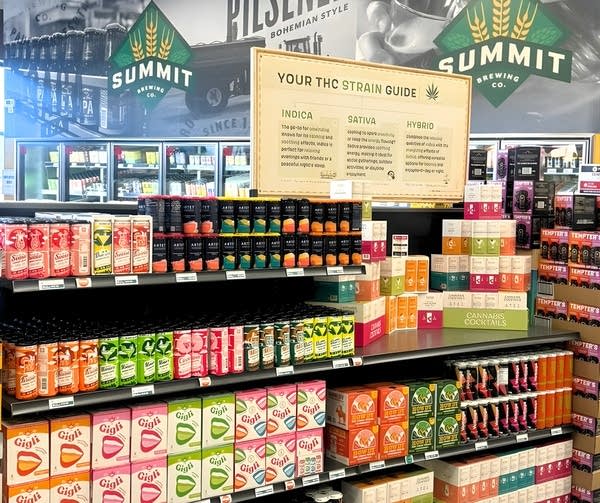
One of the biggest asks from the hemp industry was to bring back QR codes for product labeling, according to Hanson. The state phased out the use of QR codes as it began enforcing stricter packaging and labeling rules last year for low-potency hemp-derived edibles.
“Everyone wanted to be able to put a lot of the requirements under the QR codes because the packages get real full with a lot of information real quick. So those will be allowed explicitly to do that,” Hanson said.
The batch number, ingredients list and serving size still have to be visible on packaging, but information about a business's license and address can be consolidated within a scannable bar code.
Other changes for the hemp market clarify that state law allows up to 100 milligrams per serving of non-psychoactive cannabinoids (CBD, CBG, CBN, CBC) and up to 10 milligrams per serving of THC in edible “ratio hemp-infused cannabis products.” That lets companies create more products intended to treat chronic pain and other health issues.
Another allows beverage producers to make what Hanson called “large-format” beverages, which means instead of being limited to selling drinks containing at most two servings totaling 10 milligrams of THC, they can sell larger containers with up to 17 servings totaling up to 85 milligrams of THC, similar to a bottle of liquor.
And hemp producers looking to enter Minnesota’s adult-use cannabis market no longer have to shut down their existing business to do it. Lawmakers removed language barring hemp businesses from also holding cannabis licenses.
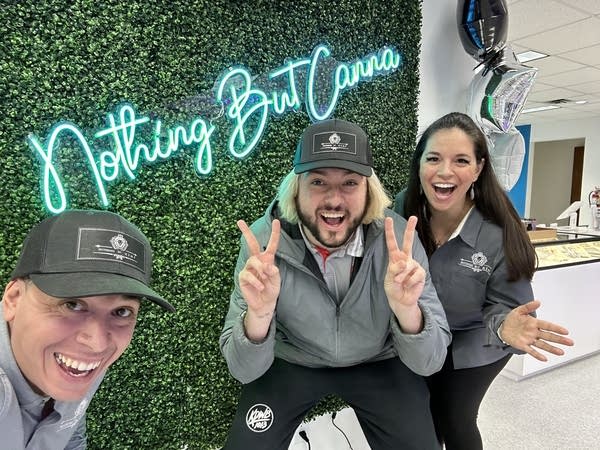
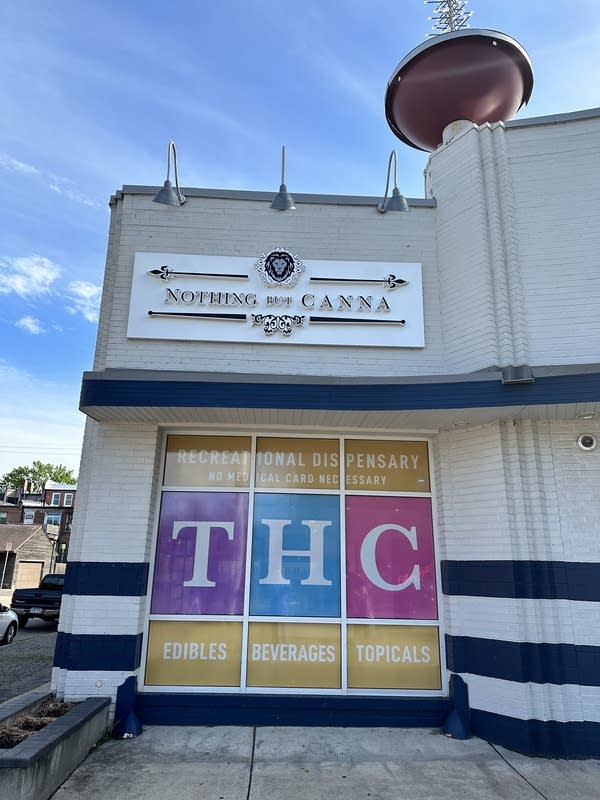
For Steven Brown, founder of Nothing But Canna, that’s a huge win. He’s transitioning into the adult-use market while running his hemp business, Nothing But Hemp.
“I would’ve had to divest from my company and I would have to move that to my other business partners, and then I would have to open up Nothing But Canna separately," Brown said. "For us to do what they would ask, it was just terrible."
Minnesota Office of Cannabis Management director Eric Taubel says after the state legalized adult-use in 2023, it made some sense to keep hemp and cannabis separate since hemp was seen as a runway to cannabis. But many successful, multi-state hemp producers like Brown were facing significant challenges with moving into recreational cannabis.
“Asking an operator to shelve that business in order to pursue a cannabis license, we didn't think it made a lot of sense. And because of the current distinction between hemp and cannabis at the federal level, there's a real business case to hold both licenses,” Taubel said.
Like many hemp producers, Brown is doubtful Congress will throw a lifeline to what’s now a multi-billion dollar industry in the U.S. The federal ban caps all hemp-derived cannabis products to 0.4 milligrams of THC per container, which would eliminate popular drinks and edibles. President Donald Trump signed it into law last fall as part of a deal to reopen the federal government.
Ongoing efforts in D.C. like Minnesota Sen. Amy Klobuchar's “Hemp Safety Enforcement Act” would protect existing hemp markets. Other proposed bills seek to delay the ban.
None of it is guaranteed.
“The days are counting down in session in Washington, D.C.,” Brown said. “I know it's still going on, but there's not too many vehicles left for hemp, and I need to understand how to forecast. Because it's either I wind down my business and start furloughing my employees or move into the adult-use space.”
He will continue to sell low-potency, hemp-derived edibles as long as it remains legal on the state and federal level. But if the ban does go into effect, he’s directing customers to Nothing But Canna.
Cannabis: New macrobusiness license, supply chains merging, social equity ownership changes
On the cannabis side, there are significant shifts to the state’s medical cannabis program. Minnesota is now encouraging recreational cannabis businesses to serve medical patients as it moves to integrate the medical and recreational supply chains.
Hanson says this change comes after hearing from the state’s two medical cannabis companies, Vireo Health and Green Thumb Industries, that it was becoming costly to have separate supply chains. More than a year ago, Green Thumb Industries wrote to legislators in favor of unifying the supply chains.
“It's quite an administrative burden to try to track everything in two separate systems, so they were having to track in two Metrc systems, which is expensive, it's administratively a nightmare, and it's just burdensome,” she said. Metrc is a technology system required by the state to track cannabis from seed to sale.
Businesses can now grow, process and store recreational and medical cannabis in the same building.
“It's really moving more toward one market,” said Minneapolis-based cannabis lawyer Susan Burns. “We started out everything really siloed — medical, cannabis, hemp — but I think there's becoming more and more fluidity between those silos, and I think that's good.”
There was also concern that patient access to medical cannabis would suffer as the adult-use market grows. Merging the supply chain can increase product availability for medical patients and protect from market changes that would otherwise shrink access to medical cannabis.
Currently, only businesses with a medical combination license could sell both medical and recreational cannabis, and the only businesses with those licenses are the state’s two medical cannabis companies. The new law will get rid of that license and create a “macrobusiness” license, which will let recreational cannabis businesses produce and sell medical cannabis. A total of eight will be allowed.
The new framework also creates a pathway for cannabis businesses to scale up through Minnesota’s licensing system. After two years with a medical cultivation endorsement, a microbusiness can “graduate” to a mezzobusiness, and a mezzobusiness can move up to a macrobusiness.

“It gives social-equity applicants the priority on that, and that also has very common sense provisions. I think that the nice feature of the macrobusiness is that you can apply for a graduated license — a higher tier, if you will — and you don't have to lose your existing license,” Burns said.
The omnibus bill also helps social-equity license holders who are struggling to get capital investments. State law still requires social-equity license holders to maintain 65 percent ownership, which is a safeguard intended to keep large corporations from taking control. But an investor can now own up to 33 percent of up to four social equity cannabis businesses — a major increase from the previous 10 percent ownership cap.
Hanson says it’s not a silver bullet, but it should help social-equity business owners get started in the market.
“The change we made was in response to social-equity business owners telling us that they were having a hard time finding investors who are interested in investing in their business,” Hanson said.
The hope with these cannabis policy changes is for Minnesota to have a strong, equitable market and protect its hemp industry despite an uncertain future.