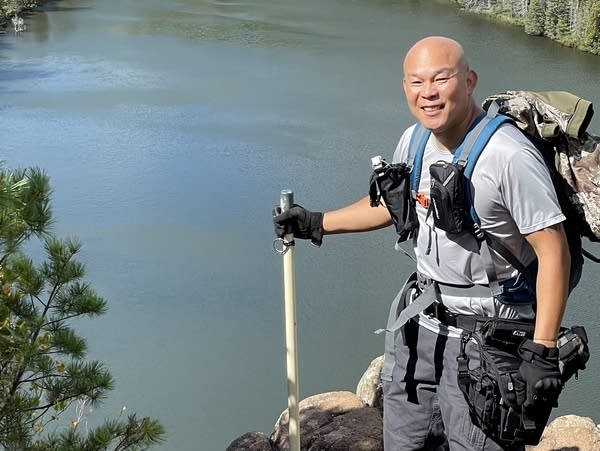
Thick, gray clouds drift over Tina Huynh-Chandee's home in Brooklyn Park on April 23, 89 days and a new season since her husband was arrested by ICE agents this winter.
“I still feel like I'm dreaming,” she said.
At “Ricky” Chandee entered ICE detention during the peak of the surge of federal agents to Minnesota. He’s one of many Hmong and Lao refugees facing deportation due to previous criminal convictions and policy shifts in the U.S. and Lao governments.
Hours after his arrest on Jan. 24, Chandee was flown to Texas and detained at the El Paso Processing Center. From there, he was transferred a few miles down the road to Camp East Montana, a large tent facility on the Fort Bliss military base. In late February, ICE moved him back to the El Paso Processing Center during a measles outbreak in Camp East Montana.
Through all of this, Chandee and Huynh-Chandee have kept in contact when possible. Huynh-Chandee said her husband calls about four times a day, sometimes briefly. They both try to stay busy to cope with the anxiety of the situation. For her, nights are more difficult.
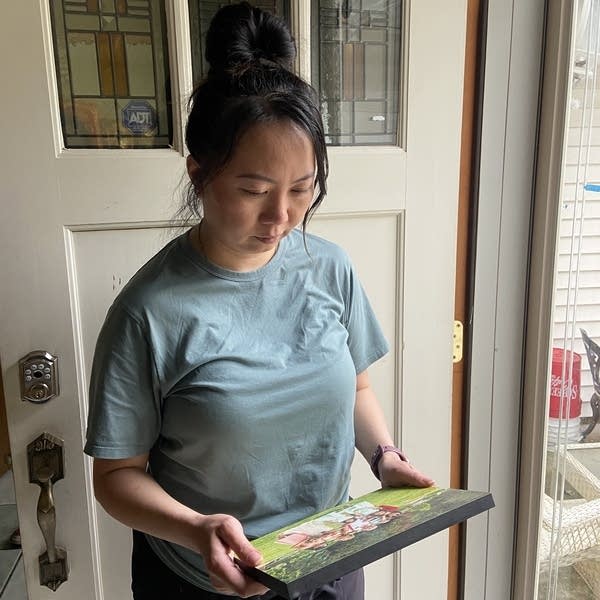
“I don’t sleep much,” she said. “I go to bed at like 3 in the morning, and then I wake up around 7:30.” That’s when Chandee usually makes his first call of the day, to let her know he was not deported overnight.
Huynh-Chandee also keeps in touch with six other families in Minnesota who have had loved ones in detention. She is in a group chat with other wives of detainees. Together they field rumors about when flights are leaving El Paso for Laos, but they never know for sure until it happens.
“My husband will call me, saying, ‘Okay, call so-and-so's wife, let her know that her husband just got deported,’ or, ‘Some handful of people just left, because they just got put on a plane to Laos,’” she said.
After two of the husbands were deported, the group chat grew quieter. “But we still try to check in, like once a week or once every two weeks, to see how everybody's doing and how their husbands are adjusting,” Huynh-Chandee said.
Between Dec. 1 and mid-March, about 90 people who were born in Laos and arrested in Minnesota were detained by ICE, according to detention statistics the Deportation Data Project obtained through the Freedom of Information Act. As MPR News has reported, the data is likely incomplete. Of those 90 individuals in the data:
-
All but one were men.
-
Seventy-one people had orders for final removal, or deportation.
-
Fifty-nine had criminal convictions that were more than 20 years old.
-
At least 11 were released from detention before March 10, the last date for which data is available.
The data also shows 10 people were deported to Laos in October and November 2025, though Huynh-Chandee heard of two deportation flights to Laos taking off in March. Prior to 2025, deportations to the country were relatively rare, but they have increased as the Trump Administration has sought to remove more immigrants and the Laotian government has agreed to accept more returnees.
Challenges in deportation
Those who return to Laos do so with precarious legal status, according to Chanida Phaengdara Potter, managing director of ROOTS Laos, a group helping people rebuild their lives after deportation. She said, until they get permanent status, they cannot own property, vehicles or land. Those with health problems may struggle to access medical care, and those without language skills may struggle to find jobs.
“The other thing that we're seeing is severe mental health crisis with the returning community, because they arrive under such dire and traumatizing experiences,” she said. “It's really hard for a lot of them who go into isolation or deep depression.”
The organization is working with volunteers and networks in Laos to support deportees, whom it refers to as returnees, with sponsorships, language classes and social activities.
“It really, truly takes a village to make that possible, and it's been beautiful to see,” she said. “It's very similar, in many ways, to the mutual aid communities that we've seen across Minnesota.”
Chandee’s lawyer, Linus Chan, said it's not clear why Chandee has not yet been deported.
“Very likely there was a situation where the Lao government wasn't issuing him travel documents,” he said. “But things can change extremely fast and the Lao government can issue travel documents or give permission to issue travel documents very quickly.”
Chan said the process by which Laos grants documents that will allow people facing deportation back into the country is opaque and plays out between the Laos and U.S. governments. “We just don't know, and it's very frustrating not to know,” he said.
Chan has asked a federal district court in Texas to order Chandee’s release. The judge rejected an emergency motion seeking to block Chandee’s deportation but has not made a ruling on his detention. The case has been unchanged since February.
The 90-day review
As of April 24, Chandee has been detained for three months, or 90 days, an interval that in some immigration cases is an opportunity to review a detention. If an individual with a final deportation order is still in detention after 90 days, and it seems unlikely the government will deport them soon, Chan says they could be released on supervision.
“Ninety days is really about a question of whether or not a person is has a significant likelihood of removal in the foreseeable future,” Chan said. “The challenge with that is that the government will argue they might have a chance to do so, depending on what happens with the next flight.”
The federal government has also sent some immigrants to countries other than those they are from. This practice also makes it more difficult to make a case for release after 90-day reviews, which Chan said, anecdotally, are happening less frequently than in the past.
MPR News asked ICE for comment on 90-day reviews but has not received a response.
Huynh-Chandee said the 90-day review was a source of hope for her husband and others around him — until ICE said they would not receive one.
“They said they're not going to give anybody their review, because they're supposedly having everybody get deported within next month or so,” she said. “But they have said that before and then people didn't end up getting deported, so we don't know.”
Huynh-Chandee said the news caused morale to drop inside the detention center.
“Everybody right now is panicking,” she said. “Some people want to get deported because they signed the form, to say, ‘Just take me back.’ And there are some people who are still out here fighting, like my husband.”
On Friday, Chandee has a hearing before the state Clemency Review Commission, which could recommend he receive a pardon in the criminal conviction that led to his deportation order. That process, which they started before he was detained, will likely take several months.
As their legal options play, Chandee and his wife are not making plans for living a world apart. They stay focused on keeping Chandee in the U.S.
Aleesa Kuznetsov contributed reporting to this story.