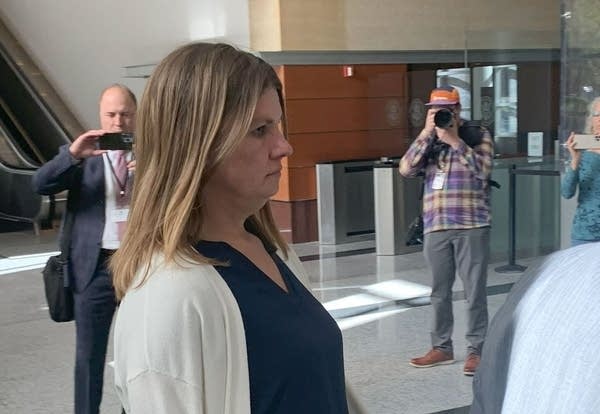
Sammi Silver never thought she would be advocating for rent control. Silver has worked as a realtor and property manager for years.
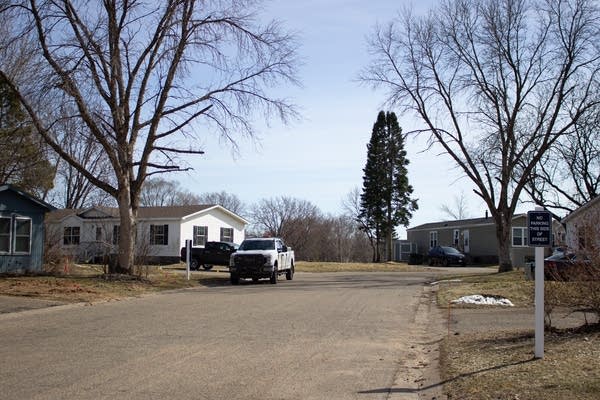
Silver, 40, moved in 2021 into Cimarron Park, a manufactured home park in Lake Elmo, and it seemed like the best way to get on her feet in the midst of a breakup and starting a new business during the pandemic. She was attracted to the “bougie” park amenities, like a golf course and a pool.
Being a mobile home owner, Silver said, “was supposed to be the step between for me, not the permanent destination that it's slowly becoming.”
Silver, who also serves as the vice president of the Cimarron resident association, said the reality of Cimarron Park is different than how it was advertised. It’s a big park with about 500 lots and is owned by Equity LifeStyle Properties (ELS), a publicly traded company based in Chicago that owns parks in 23 states. When Silver first moved to Cimarron in 2021, she said lot rent was around $745 a month. She said she’s currently paying $1,070 and rent goes up every six months.
Silver said even as she pays more, the golf course isn’t maintained and the pool isn’t open in the evenings or on weekends when some families want to use it. Residents at other ELS-owned parks have voiced similar complaints.
In a statement to MPR News, a spokesperson for ELS said the company regularly revitalizes Cimarron Park and amenities are “well maintained.” The statement from ELS said the lot rent increases are “in line with those of comparable housing in the area” and rent has gone up about 6 percent annually between 2022 and 2026.
Lawmakers weigh moves
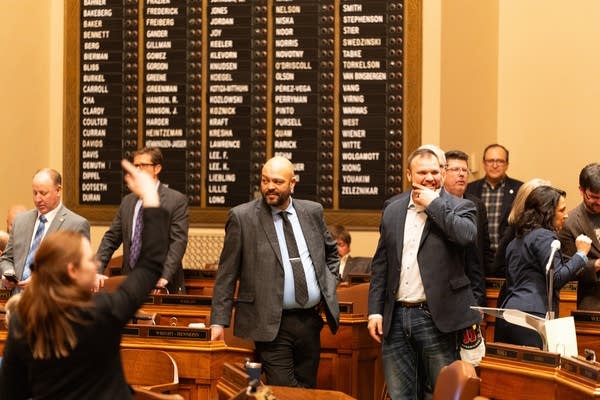
How the state should regulate manufactured housing parks is the subject of debate at the Capitol this year. Some lawmakers are pushing a bill that would encourage park owners to sell their communities to the residents, require park owners to provide itemized billing and curb rent increases.
Current law allows park owners to raise rent twice a year and doesn’t limit how much.
Silver said she’s being priced out of the community, but actually leaving isn’t easy. Most residents of mobile home parks in Minnesota own their homes, but rent the land underneath.
Silver said the rental market for mobile homes looks completely different from the traditional rental market she deals with as a realtor. If a landlord of a duplex raises the rent, the renter can leave. But a mobile home owner can only leave a park two ways: by moving their home or selling their home.
Moving manufactured homes can cost tens of thousands of dollars and ultimately damage the home. There also aren’t many places in Minnesota zoned for mobile homes and new parks aren’t being built so it can be difficult to find land to move the home to.
Silver said with every lot rent increase it gets harder to find a buyer to buy her home.
“I actually want out of here next year. I'm really trying,” Silver said. “I'm either going to take a huge loss and sell at a loss just to get out of here, or I'm stuck here for the next Lord-only-knows how long.”
Silver supports the bill in front of the Minnesota Legislature that would limit lot rent increases to 3 percent annually, with some exceptions, and would require park owners to provide itemized billing.
Big business for out-of-state companies
Advocates of the bill, which they dub the Manufactured Home Residents Bill of Rights, said passing the legislation is urgently needed as more parks are sold to out-of-state corporate owners, including private equity firms.
CoNorth, a nonprofit that helps residents form housing cooperatives, tracks sales on manufactured home parks through reports to the Minnesota Department of Revenue. The group found that in 2025, 13 parks were sold to out-of-state buyers, versus 12 to in-state buyers. However, those 13 parks represented about 85 percent of the lots sold that year because the parks tended to be bigger.
ELS, which owns four manufactured home parks in Minnesota, wouldn’t comment on the bill when asked by MPR News. However, according to the company’s FEC filings, ELS has sued municipalities over rent control regulations “in an attempt to balance the interests of our stockholders with the interests of our residents and guests.”
Residents have testified at the state Capitol for years that when out-of-state corporations buy the parks they live in, rent starts increasing at a faster rate.
Tami Fry, a resident of the manufactured home park Blaine International Village, told Minnesota representatives on March 11 that life has changed dramatically since her park switched from local ownership to an out-of-state investment firm, Havenpark Communities. Fry said in nine years of living in the park under the local landlord her rent increased about $15 a year. When Havenpark bought the park in 2021, rent was about $440. Fry said rent has increased to about $700 total today.
Fry said in 2023 she took early retirement to care for her parents. “As a result, I lost two thirds of my income,” she said.
“My stepfather passed away just months after I retired, and my mother passed this last December. It was always my intention that once my folks passed, I would sell my home and move out of the cities,” Fry said. “I now feel trapped as I cannot sell my home.”
Fry told the representatives she wasn’t just speaking for herself. “I have 3,500 petition signatures in support of this bill,” she said while holding up a stack of papers.
“I am no pro. I am not paid. I am just a homeowner who is willing to take the time and the effort to get this bill passed, because I can't stand how we as manufactured homeowners are being treated by faceless corporations,” Fry said.
’Feels like a hammer’
However, some Minnesota park owners have testified that whether or not the intention of the bill is to rein in out-of-state businesses and investment firms, the reality is it would hurt their businesses.
Mark Lambert of Summit Management owns eight mobile home parks in the state. He told state senators last month that the bill has too many complicated requirements and would hurt his business.
“I'm a community owner for 42 years,” Lambert said. “I am not private equity.”
Lambert said the bill doesn’t acknowledge rising costs in the industry and it unfairly privileges resident-owned parks.
“This feels like a hammer that squashes a lot of people that haven't done wrong, perhaps a couple of these private equity guys have done wrong,” Lambert said. “But that doesn't mean that an over-encompassing law is a solution to this.”
Havenpark Communities is one of at least seven out-of-state investment firms that own and operate manufactured home parks in Minnesota, according to data from the Private Equity Stakeholder Project.
Havenpark Communities would not comment on the bill when asked by MPR News and instead shared a statement that read, in part: "We have invested over $40 million in our Minnesota communities since entering the state in 2019 as part of our work to enhance infrastructure, add new amenities, and create enduring value for current and future residents."
Havenpark Communities pays four lobbyists in Minnesota to keep watch on bills related to manufactured housing.
Havenpark’s spokesperson disputed its characterization by critics as a private equity firm, saying private equity firms quickly resell properties while Havenpark Communities generally holds on to mobile home parks for the long term.
In working to defeat similar bills in past years, Havenpark officials warned that rent control would face legal challenges, hinder investment and could backfire on residents if their home values fall as park owners pull back.
Advocates of the bill argue companies like Havenpark are inflating the value of manufactured housing communities by paying a lot up front for parks and passing the cost onto residents later. In 2021, Havenpark bought a park in Chaska for $40 million — or about four times what Minnesota Department of Revenue records stated the park was worth.
An “opportunity to purchase” for residents
The bill would also require park owners who want to sell their park to give residents notice of their intent to sell and time to make an offer on the park. Many park sales are private and residents don’t know their park is being sold until the sale is finalized.
Fifteen manufactured home parks are owned by the residents in Minnesota and run as cooperatives with the help of CoNorth. Their lot rent pays for park expenses and the loan the residents took out to buy the park.
Park Plaza Cooperative in Fridley, just north of Minneapolis, is one of those communities.
Natividad Seefeld, the president of the Park Plaza Cooperative, has lived there for about three decades and helped organize her neighbors to buy the park in 2011.
“I just love it here. I would never move,” Seefeld said. “I'm going to pass away here.”
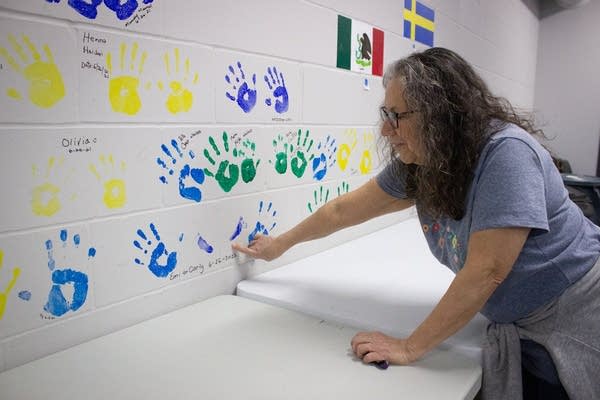
The park has about 85 homes and is a diverse community, home to both seniors and young families.
“In one year, we had seven brand-new babies,” Seefeld said. “What gives [families] the ability to be able to say, yes, I want to have another child? The safety net of having your home and the land that you own underneath it really makes a difference, and knowing that your rent’s not going to keep climbing every year.”
Seefeld said rent is currently $545 and hasn’t been raised since 2024. Small rent increases and grants have funded various park projects like installing fencing between homes and roads, installing a new playground and building a state-of-the-art storm shelter that also serves as a community center.
Seefeld has testified at the Capitol about why residents deserve time to make an offer to buy their parks.
“We just want the opportunity to be able to take control of our lives and have a safe place to live,” Seefeld said.
The DFL bill recently gained bipartisan support in the Minnesota Senate, but stalled along party lines in the House.
At least 21 other states already have laws on the books that encourage park owners to sell to residents. Several states including California, Oregon, Vermont and Washington State limit rent increases.
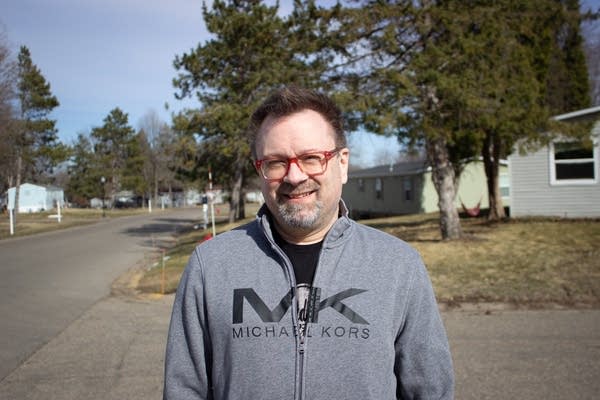
Back in Lake Elmo, Trevor Nelson is among the Cimarron mobile home park residents who has a message for his legislators:
“These out-of-state corporations aren't the ones that are voting for them in November. It's their constituents. It's the people that they are supposed to be there taking care of,” Nelson said.