On a Minneapolis street, architectural historian Jane King Hession stands between a red-brick house and a boxy white one perched above Interstate 94.
Each is a Minnesota architectural landmark. The brick Malcolm Willey House was designed in the 1930s by a giant of 20th century architecture, Frank Lloyd Wright, and was a link between his early Prairie School-style of architecture and his later Usonian style.
Across the street is a white minimalist two-story house with a periwinkle blue driveway. The Faulkner House was built in 1938 and was the first home in Minneapolis designed in the International Style, a Modern architecture movement from Western Europe that prized function over form, clean lines over ornamentation and new industrial technologies and materials (glass, steel, concrete) over old ones.
The Faulkner House was designed by a lesser known but quietly influential architect, Elizabeth “Lisl” Scheu Close, who has been a muse for Hession for decades.
“What I would like people to know about Elizabeth Close is that she was a trailblazing Modern architect,” Hession said.
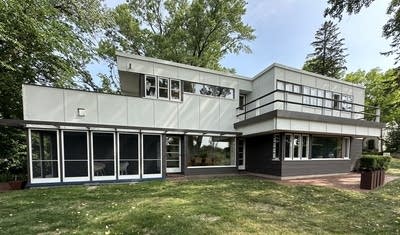
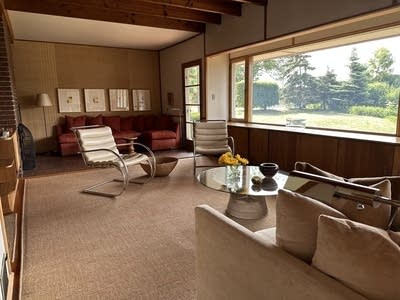
At the time, the Faulkner House would have been a “shock in the neighborhood,” Hession said, surrounded by century houses in Tudor and Colonial styles, ornamented with gables, shutters, window boxes and other decorative flourishes.
“Elizabeth Close was a very practical architect, and she was interested in designing a functional house,” Hession said. “She felt many houses had problems designed into them from the beginning, and she wanted to get rid of those when she designed her homes.”
Even the more Modern Wright-designed home was constructed in familiar red brick, while Close chose redwood siding and resin-bonded plywood.
“I like it simple and unpretentious and easy to take care of,” Close told MPR in a 2000 interview. “Maintenance is such a chore.”
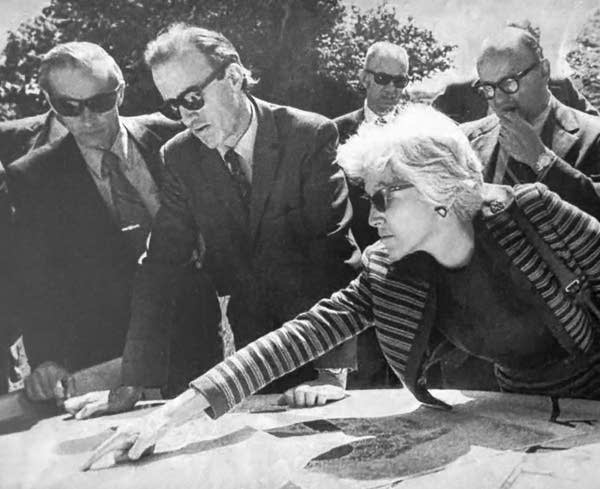
Hession has been studying the work of Close, Minnesota’s first Modern architect, for decades, even conducting an oral history with the architect in 2000 for the Minnesota Historical Society. Close passed away at the age of 99 in 2011.
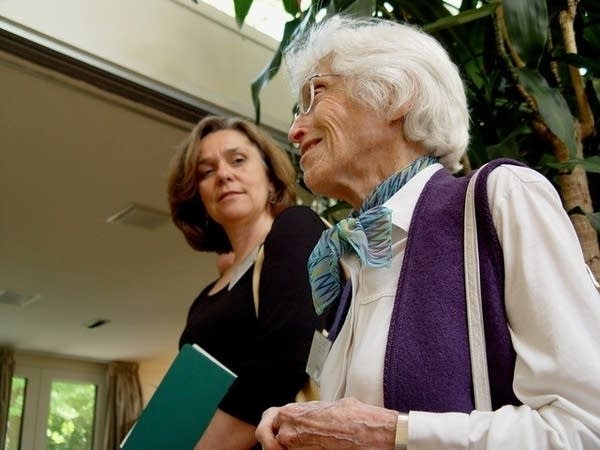
“When I first met her, and I would say after my first session, it became really clear to me that this woman had an incredible life, an incredible career. Why didn't I know more about her?” Hession said. “I went to architecture school at the University of Minnesota. I don't recall her name ever being mentioned. So it became clear to me that her story needed to be told, and I wanted to be the one to tell it.”
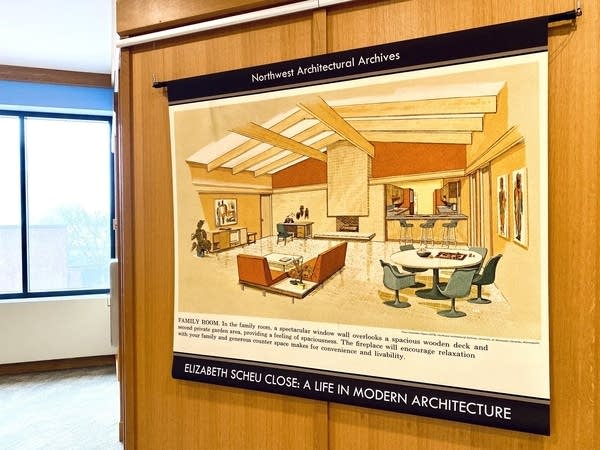
This month, the University of Minnesota Press published Hession’s book “Elizabeth Scheu Close: A Life in Modern Architecture,” which features many of the more than 250 houses Close designed in Minnesota, as well as projects including hospitals, community centers, churches and Ferguson Hall, home to the music school at the University of Minnesota. In 2002, Close became the first woman in Minnesota history to win the Gold Medal from the state chapter of the American Institute of Architects, one of the highest honors in the field.
“There were no other architects like her,” Hession said. “She was not the first female architect in Minneapolis or Minnesota, but they were very, very few, and she quickly became one the most prominent female architects in the state.”
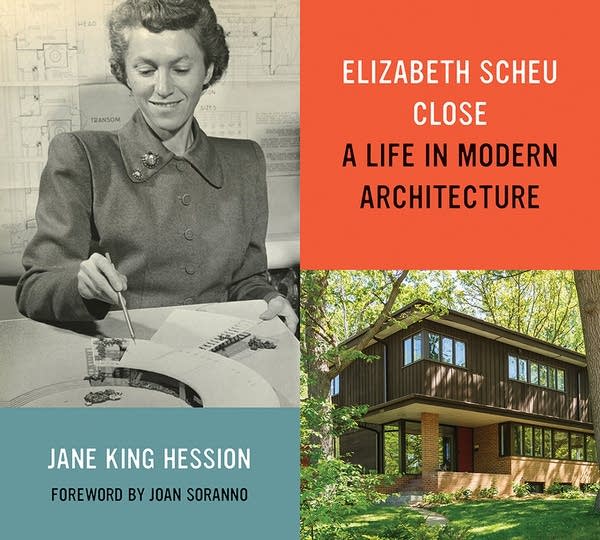
The book came out in hardcover in March 2020, but the events surrounding the release, including an exhibit and lecture, were canceled because of COVID. With the release of the paperback, Hession is reviving a moment to celebrate and reflect on the legacy of Close, known to friends and family as “Lisl.”
Hession will give a free book talk at 6 p.m. on Wednesday, April 29, at the Elmer L. Andersen Library at the University of Minnesota. Hession also curated the exhibit on Close at the library, which is on view through May 22. (Hession also co-curated the 2025 exhibition “Making Room: Women’s Histories from the Northwest Architectural Archives” at the University of Minnesota)
“My mother would have been very pleased,” Roy Close, Close’s son, said of the book. “She was never doing it for the glory. It was that she wanted to be an architect, having seen the kind of impact that architecture could have on the people who lived in the homes.” He adds, “It meant a lot to her.”
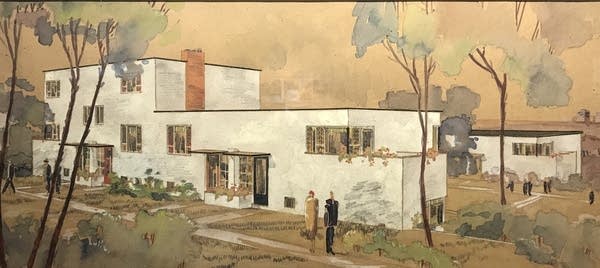
The book is a deep dive into the life and career of Close, who was born in 1912 in Vienna, Austria, to a prominent Social Democratic family and grew up in a house designed by leading Modernist architect Adolf Loos, a residence similar to the Faulkner House with its geometric lines and stripped-down exterior. It was here that Close developed a passion for Modern architecture.
“Lisl’s upbringing in Vienna was very interesting, because she was born into a very politically active family,” Hession said. “Among the things that her father, who was a lawyer, did was he was involved with providing housing for people in need after World War I, and there was great need for housing in Vienna and other parts of Europe at the time. So, she had this example of someone who saw architecture as a way to serve social needs and help people.”
Close began architecture studies in Vienna, but, at age 20, emigrated to the U.S. to study architecture at Massachusetts Institute of Technology, where she met her husband and fellow architect, Minnesotan Winston Close. In both Austria and the U.S., Close faced misogyny in the male-dominated field, with many firms refusing to hire her, but she persisted.
“She didn't let anything stop her. She didn't get angry, she didn't get even,” Hession said. “She just kept moving, and she just kept achieving her personal goals, and those goals were to design efficient architecture that serves the needs of the people living in it.”
“She took the attitude that she was an architect first and a woman second,” Roy Close said. “She expected to be treated professionally, and I think insisted on it.”

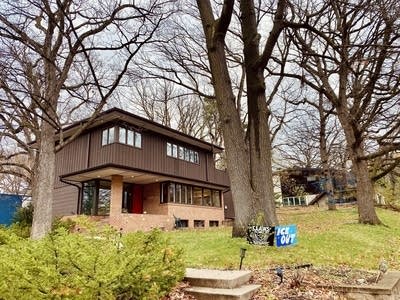
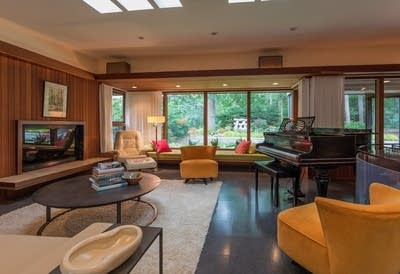
In 1936, Elizabeth and Winston Close moved to Minneapolis and by 1938, they had opened Close and Scheu, the first Minnesota architecture firm dedicated to Modern design. While Winston was also an advisory architect to the University of Minnesota, Close became the dominant force at the firm, designing more than 250 houses that reshaped how Minnesotans think about private residences.
Hession explains that Close’s legacy was working closely with clients to understand how to design a home that could work best for them, instead of imposing her design on them, which was a common practice for architects in the 20th century.
“When you design a house for someone, you get to know them really well, and inevitably you get to be friends,” Close said in the MPR interview.
“It wasn't really about style for her, it was about solving an architectural problem, and I think middle class Americans became more interested in living more freely in a house,” Hession said. “She wanted her architecture not to be a palace for someone to live in, but a functional space tailored to that person's needs that would support a well-lived life.”
Hession’s work on Close continues. She and Kimberly Long Loken, an associate professor at University of Wisconsin-Stout’s School of Art and Design, are working on a documentary about the architect that is set to come out in 2027.