Paredes' 2-run homer in the 1st inning powers Astros to a 2-1 win over the Twins


Isaac Paredes hit a two-run homer in the first inning, Jason Alexander scattered four hits over six scoreless innings and the Houston Astros beat the Minnesota Twins 2-1 on Tuesday night.

Jeremy Peña singled off Zebby Matthews (1-1) to open the game and Paredes followed with his fifth home run — on a 3-2 pitch — for a 2-0 lead.

Alexander (1-0) walked one and struck out four after allowing 10 runs in 6 1/3 innings in his first two outings this season.

Astros reliever Bryan King struck out Brooks Lee on his 13th pitch to begin the ninth and Victor Caratini grounded out on the next pitch.

Orlando Arcia had a two-out single that chased King. Bryan Abreu entered and hit pinch-hitter Luke Keaschall with his second pitch.

Arcia and Keaschall runners advanced on a wild pitch before Abreu retired Byron Buxton on a pop-out in foul territory at third for his third save in three opportunities.

Buxton had a one-out double in the eighth off Enyel De Los Santos and Josh Bell drove him in with a two-out single to cut it to 2-1. King replaced De Los Santos and surrendered a single to Kody Clemens before retiring Austin Martin on a groundout to keep the Astros in front.

Matthews worked six innings and never gave up a run after the first in his second start this season. He allowed six hits, didn't walk a batter and struck out six.

The Twins optioned 2017 No. 1 overall pick Royce Lewis to Triple-A St. Paul before the game and placed catcher Ryan Jeffers on the injured list.

Houston placed RHP Lance McCullers Jr. on the IL before the game with right shoulder soreness. The Astros have 13 players on the IL, most in the majors.

Astros RHP Mike Burrows (2-5, 5.72 ERA) starts Wednesday's series finale opposite Twins RHP Joe Ryan (2-3, 3.20).


Source link

Leave a Reply

Subscribe to Our Newsletter

Get our latest articles delivered straight to your inbox. No spam, we promise.

Recent Reviews


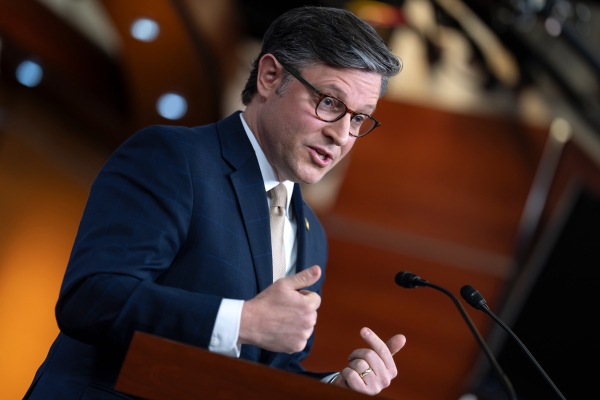
Speaker of the House Mike Johnson, R-La., takes questions at a news conference at the U.S. Capitol on April 21, 2026.

Speaker of the House Mike Johnson, R-La., takes questions at a news conference at the U.S. Capitol on April 21, 2026.
Speaker of the House Mike Johnson, R-La., takes questions at a news conference at the U.S. Capitol on April 21.
J. Scott Applewhite | AP

The House of Representatives voted Thursday to reopen most of the Department of Homeland Security, ending the longest agency shutdown in U.S. history.

The House passed a bill funding DHS, minus dollars for Immigration and Customs Enforcement and Customs and Border Protection. The measure passed by voice vote on what was the 76th day of the shutdown.

Democrats refused to back funding for many of the agency's immigration functions in an unsuccessful effort to secure reforms including body-worn cameras and broad restrictions on face coverings after federal law enforcement killed two American citizens in Minnesota earlier this year.

The Senate, led by Republican Majority Leader John Thune, R-S.D., unanimously advanced this funding legislation in March. At the time, Speaker Mike Johnson, R-La., referred to the proposal as "a joke" and refused to bring it up for a vote. Many members of the House Republican conference refused to fund the agency in a piecemeal fashion and did not want to negotiate over reforms to immigration enforcement operations.

On April 1, Johnson reversed course. He announced the funding bill would be voted on "in the coming days." More than four weeks later, he finally made good on that commitment.

In an effort to appease his hardline members, Johnson waited to bring the Senate's proposal to a vote until that chamber's Republicans started the arcane procedural process, known as reconciliation, to fund all of DHS — including Immigration and Customs Enforcement (ICE) and Customs and Border Protection (CBP) — for the remainder of Trump's term without any backing from Democrats.

The funding bill comes as Secretary of Homeland Security Markwayne Mullin warned the agency was close to running out of funds to pay staff.

"We have reached all the emergency funds we can reach into," Mullin told Fox News on Friday. "I am completely out of the slush fund, I have no place to move at the end of the month."

Mullin said the agency was relying on appropriated funds from last year's One Big Beautiful Bill, which allocated more than $150 billion to DHS on top of its regular annual appropriations funding.

President Donald Trump signed a memo this month authorizing DHS to use some of the money from that legislation to fund the department's operations — potentially infringing on the powers granted to Congress by the Constitution to direct how taxpayer money is spent.

Copyright 2026, NPR


Source link