

Remembrance event provides support for MMIR in Duluth


Two protesters applying paint to the other's faces

Goonz Martin remembers his relative Peter well.

“He had a lot of good values within himself,” Goonz Martin said.

The Martins are members of the Fon du Lac Band of Lake Superior Chippewa. Peter Martin went missing in March 2024.

“He was a good role model for our youth and our community back home in Fond du Lac,” Goonz Martin said.

He’s far from the only one.

Families stood in front of a large staircase Tuesday in Duluth City Hall to share stories of their loved ones who have gone missing or have been murdered. May 5 is widely marked as a day to remember missing and murdered Indigenous people.

Martin sang two songs with his drum that echoed throughout city hall. Families of two women who died in 2024, Amanda Boshey and Chantel Moose, also spoke.

Martin said the day is a time to be in community with others who have also experienced similar loss.

“It means a day to remember all the loved ones, all of our people that were murdered or missing, that a lot of us didn't get to say goodbye to, you know? And that's how we show our respect,” Martin said.

According to the state's Bureau of Criminal Apprehension, nearly 9 percent of missing people in Minnesota in 2025 were Native American or Alaska Native — far higher than the overall percentage population, which is less than 3 percent.


In 2022, the City of Duluth partnered with the Native Lives Matter Coalition and nonprofit Mending the Sacred Hoop to create a reward fund for missing and murdered Indigenous people. Gaagige-Mikwendaagoziwag, meaning “They Will Be Remembered Forever” in the Ojibwe language, offers rewards for information leading to solving open missing and murdered indigenous relatives, or MMIR, cases in Duluth.

Last year, the state’s MMIR office announced a similarly named fund for statewide cases.

Rene Ann Goodrich, from the Bad River Band of Lake Superior Chippewa in Wisconsin, leads the Native Lives Matter Coalition in Duluth and facilitates the annual gathering.

 ”We're blessed to have families that instill their trust in us. Some of them to tell their story, and we're blessed when families do,” Goodrich said.

The gathering included a prayer, artwork, a youth-led round dance and songs from a school drum group. Proclamations from the cities of Duluth and Superior were also read.

Before reading the proclamation, Superior Mayor Jim Paine said the MMIR movement is saving lives.

“There are people that did not leave us because you were protecting them,” Paine said. “Because you know to look out for them, because you know what to do if they disappear, or if that relationship starts looking bad, or if they start facing the ravages of addiction or abuse, or poverty, they have community now that will step up.”



Source link

Leave a Reply

Subscribe to Our Newsletter

Get our latest articles delivered straight to your inbox. No spam, we promise.

Recent Reviews


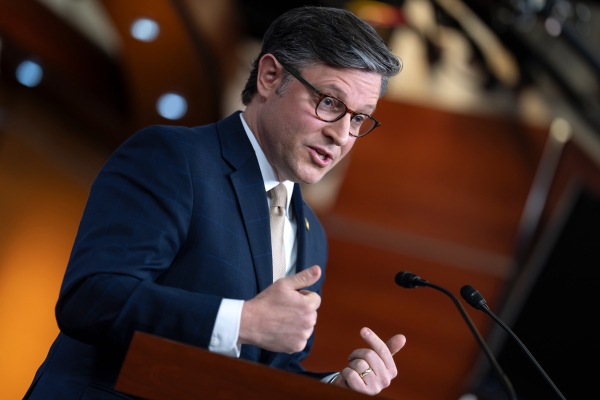
Speaker of the House Mike Johnson, R-La., takes questions at a news conference at the U.S. Capitol on April 21, 2026.

Speaker of the House Mike Johnson, R-La., takes questions at a news conference at the U.S. Capitol on April 21, 2026.
Speaker of the House Mike Johnson, R-La., takes questions at a news conference at the U.S. Capitol on April 21.
J. Scott Applewhite | AP

The House of Representatives voted Thursday to reopen most of the Department of Homeland Security, ending the longest agency shutdown in U.S. history.

The House passed a bill funding DHS, minus dollars for Immigration and Customs Enforcement and Customs and Border Protection. The measure passed by voice vote on what was the 76th day of the shutdown.

Democrats refused to back funding for many of the agency's immigration functions in an unsuccessful effort to secure reforms including body-worn cameras and broad restrictions on face coverings after federal law enforcement killed two American citizens in Minnesota earlier this year.

The Senate, led by Republican Majority Leader John Thune, R-S.D., unanimously advanced this funding legislation in March. At the time, Speaker Mike Johnson, R-La., referred to the proposal as "a joke" and refused to bring it up for a vote. Many members of the House Republican conference refused to fund the agency in a piecemeal fashion and did not want to negotiate over reforms to immigration enforcement operations.

On April 1, Johnson reversed course. He announced the funding bill would be voted on "in the coming days." More than four weeks later, he finally made good on that commitment.

In an effort to appease his hardline members, Johnson waited to bring the Senate's proposal to a vote until that chamber's Republicans started the arcane procedural process, known as reconciliation, to fund all of DHS — including Immigration and Customs Enforcement (ICE) and Customs and Border Protection (CBP) — for the remainder of Trump's term without any backing from Democrats.

The funding bill comes as Secretary of Homeland Security Markwayne Mullin warned the agency was close to running out of funds to pay staff.

"We have reached all the emergency funds we can reach into," Mullin told Fox News on Friday. "I am completely out of the slush fund, I have no place to move at the end of the month."

Mullin said the agency was relying on appropriated funds from last year's One Big Beautiful Bill, which allocated more than $150 billion to DHS on top of its regular annual appropriations funding.

President Donald Trump signed a memo this month authorizing DHS to use some of the money from that legislation to fund the department's operations — potentially infringing on the powers granted to Congress by the Constitution to direct how taxpayer money is spent.

Copyright 2026, NPR


Source link