With legal and political challenges intensifying around everything from diversity, equity, and inclusion (DEI) to shareholder advocacy, it makes sense that foundations and nonprofits in the crosshairs would feel pressure to move cautiously. But for investors, risk is not an aberration. It is baked into the process of forming an investment strategy.
At the 2026 Mission Investors Exchange (MIE) National Conference in Atlanta, impact investors worked to reevaluate and reframe risk. Instead of using risk primarily to determine how restrictive or defensive a strategy should be, many speakers argued that risk can become a key to scaling impact.
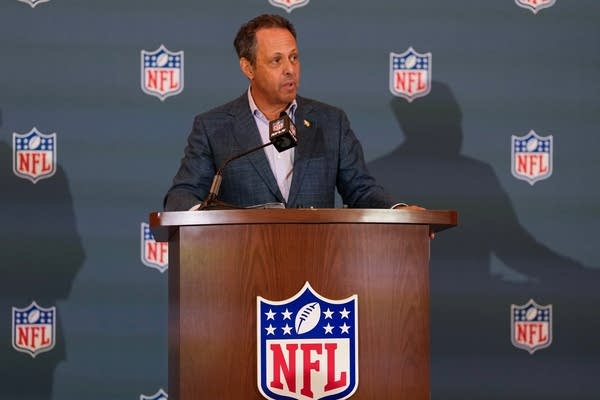
“I do think that we have to think of risk as an asset, meaning how can we deploy [risk]? … How can we use risk to actually stimulate change?” said Stephen Heintz, President and CEO of the Rockefeller Brothers Fund. The Rockefeller Brothers Fund is a long-time MIE member and an established institution in both philanthropy and impact investing.
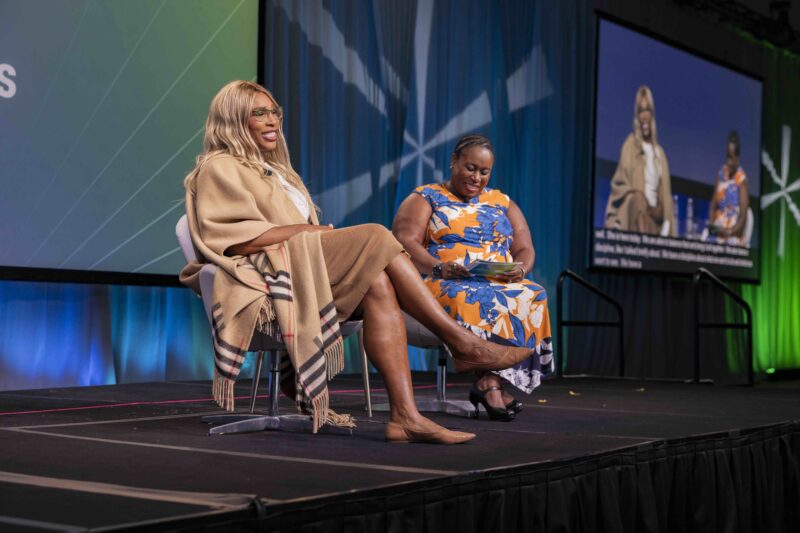
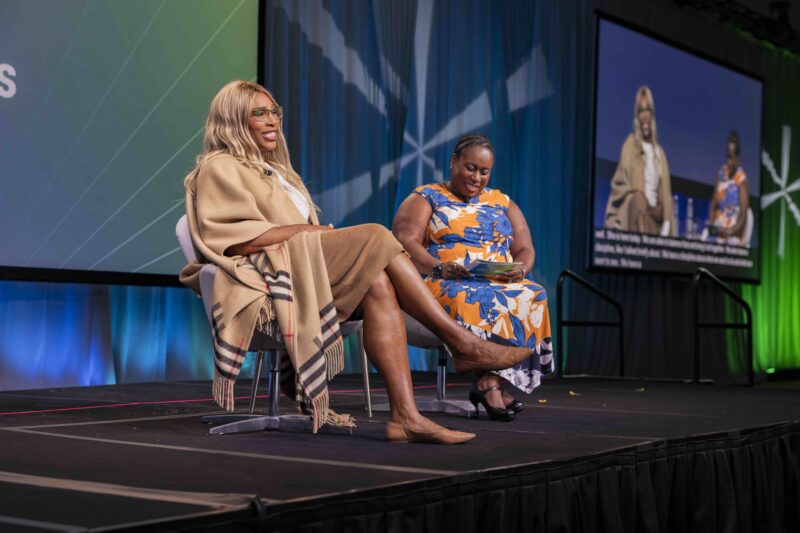 Serena Williams speaking about her early-stage venture capital firm Serena Ventures, in conversation with Carla Thompson Payton of W. K. Kellogg Foundation during the opening plenary; Photo by Ashley Gilmer, Divine Eye Media
The biennial Mission Investors Exchange National Conference brings together impact investors, primarily from philanthropy, to coordinate and activate capital for deep, mission-aligned impact. This year’s conference gathered foundations, mission-driven asset owners, and field-building organizations in Atlanta from April 27–29. Attendees ranged from MIE’s earliest members to foundations exploring their first program-related investments (PRIs).
Risk as catalytic capital
Regardless of the investment, someone has to be first. Traditionally, these first capital providers are considered the risk-takers, putting money up before there are guarantees of a profitable return. But some impact investors argue that early investment into impactful projects can actually reduce risk over time.
Risk is ultimately a calculation about protecting what matters.
The Atlanta Beltline, a major public-private initiative at the center of MIE’s host city, is in part the result of early impact investments. One project along the Beltline, Pittsburgh Yards, grew out of an initial property purchase and investment from the Annie E. Casey Foundation. Casey took early risk, but its impact focus meant the foundation could proceed in a patient, community-driven way. Once the project was ready for development, Casey had helped reduce the project’s risk through community buy-in, making it more appealing to other private investors while protecting its long-term impact.
Baltimore Community Foundation (BCF) President and CEO Shanaysha Sauls pointed to BCF’s similar approach as a key means of scaling place-based solutions.
“Neighborhoods are petri dishes for outcomes,” Sauls said. “So we’ve really started thinking about our tools in terms of neighborhoods, how we draw on the whole investment.”
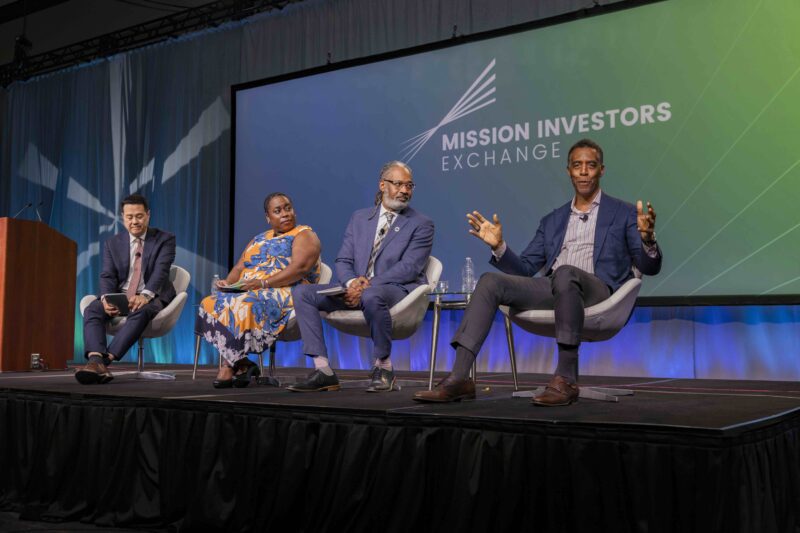 Don Chen of Surdna Foundation, Carla Thompson Payton of W. K. Kellogg Foundation, Cory Anderson of Winthrop Rockefeller Foundation, and Rey Ramsey of Nathan Cummings Foundation during the opening plenary panel on “Investing for Collective Prosperity; Photo by Ashley Gilmer, Divine Eye Media
For community foundations like BCF, that might include small program-related investments — investments that are designed to advance a charitable purpose and may accept different financial expectations than conventional market-rate capital. PRIs can allow foundations to build trust, confidence, and stability around projects that may later be able to scale.
It is not only place-based investors who are thinking about catalytic risk. Tennis champion Serena Williams joined the conference to talk about how her venture capital firm, Serena Ventures, aims to reshape how capital flows to underrepresented founders. Venture capital continues to flow disproportionately away from women founders and founders of color, despite their talent, experience, and market insight. Williams framed that capital gap as a missed opportunity.
What many investors have historically treated as risk may actually be a ground-floor opportunity.
With Serena Ventures, Williams uses her own investing experience and reputational capital to shift perception: what many investors have historically treated as risk may actually be a ground-floor opportunity. Investors have the chance to see value where others are not looking — and, in doing so, help build both stronger companies and more inclusive markets.
The risk of speaking out
Beyond investment risk, impact investors are increasingly concerned about the possible repercussions of speaking openly about their values. Many foundations worry that maintaining or increasing their commitment to values-aligned investing could make them targets of political or legal action, ultimately undermining their organizational work. From the MIE mainstage, however, foundation leaders reiterated their commitment to their values, citing measures such as not removing racial equity language from websites or mission statements. Instead, they encouraged attendees to consider the risk of changing course.
Tonya Allen, President of the McKnight Foundation, said McKnight has shifted from thinking about “risk mitigation to risk intelligence.” Many strategies to address the political risk of naming DEI are preemptive, changing language and tactics before they ever become a problem. Allen argued that this can make antagonists more effective without requiring them to act.
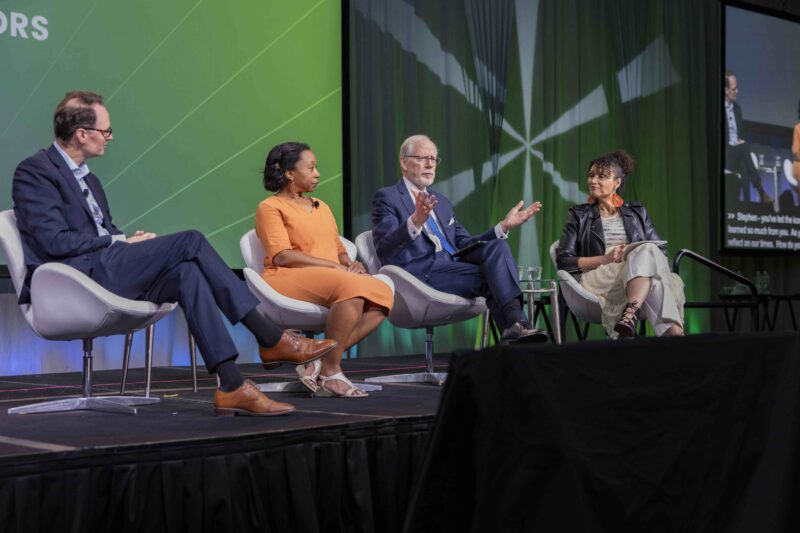 “Investing and Leading Amidst Uncertainty” plenary on the second day featured a panel of foundation presidents: (from left) John Palfrey of the John D. and Catherine T. MacArthur Foundation, Shanaysha Sauls of the Baltimore Community Foundation, Stephen Heintz of Rockefeller Brothers Fund, and Tonya Allen of the McKnight Foundation; Photo by Ashley Gilmer, Divine Eye Media“We have to name the issues that we’re facing,” Allen said.
But investors and philanthropists will need to listen to the right voices to do so. Without guidance on the foundation’s priorities, lawyers and advisors may recommend the most conservative course of action in order to reduce traditional measures of risk. Impact investors do not make decisions the same way conventional investors do, so they should not evaluate risk in the same way either.
Allen suggested that leaders consult advisors who can take in the whole picture — financial, social, political, and values-based — and help organizations determine how to reach their goals without retreating from their mission.
Risk through a systemic lens
Just as investment portfolios factor in time horizon when calculating risk, impact investors are taking a longer view. Many are seeking to change the systems that create and maintain inequity and harm. Systems change inherently requires a long-term lens, and the choices investors make now will have consequences for decades to come.
For some organizations, a long-term, systemic approach means increasing their investments and commitments. The Northwest Area Foundation shared that it has doubled its capital commitments in light of federal funding withdrawals in the communities it serves, and it is not alone.
“The paradox is that the scale of the problems we are attempting to address is outpacing the scale of our response,” said Heintz. “We certainly have a grants budget, and we need to use that very strategically, but we also have our endowments, so impact investing becomes not a good thing to do — although it is — but it becomes an imperative. It’s something we have to do.”
A long-term view of risk also requires investors to make choices now that can reduce future risk for both organizations and communities.
The greater risk may be treating caution as wisdom when the work itself requires courage.
“In terms of specifically around impact investing, I encourage people to think about the new safety net that we’re going to have to weave,” said Sauls.
The last few years have shown that change and uncertainty are inevitable for investors and communities alike. Investors can learn from these social, political, and economic disruptions and use capital to help build more resilient systems.
“Part of what we’ve been thinking about is what does it take for us as an institution to have the kind of agility and freedom that we need to be able to respond to disruption, to risks that are going to show up on our doorstep and we weren’t anticipating it,” said Allen. “And also, are we freeing up capital so that we can actually be able to respond to risk?”
Shifting from risk-ready to risk-forward
Risk is not objective. Determining an organization’s risk level often depends on who is doing the measuring.
Prioritizing some kinds of risk over others can lead investors to step back from the spotlight — or to increase allocations to communities facing the greatest harm. For foundations, protecting impact has historically meant protecting the endowment. But it does not have to.
“Our board sees endowment as a tool for action, not a reason for caution. It actually is our freedom,” said Allen.
Risk is ultimately a calculation about protecting what matters. For impact investors, the question is not only what is at stake if they continue. It is also what is at stake if they do not. In a moment defined by political uncertainty, capital scarcity, and widening social need, the greater risk may be treating caution as wisdom when the work itself requires courage.