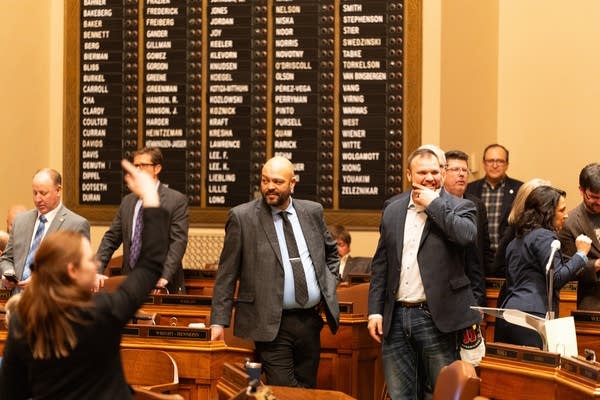

Watch the floor proceedings live here.
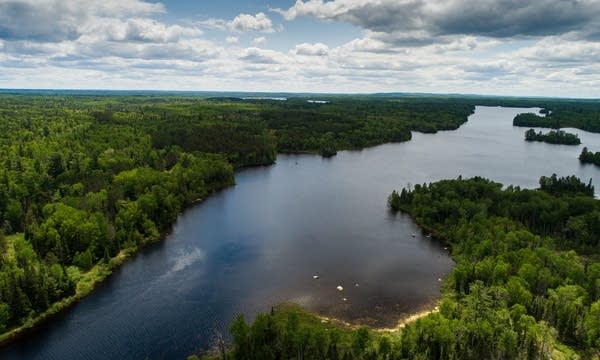
The U.S. Senate plans to vote Thursday on a move to undo a 20-year moratorium on mining on a huge swath of federal land near the Boundary Waters Canoe Area Wilderness.
The vote follows several hours of debate on the resolution that extended until nearly midnight Wednesday. U.S. Sen. Tina Smith, D-Minn., spoke for well over two hours against the proposal.
With a thick binder in front of her, she spoke about her personal connection to the Boundary Waters, recounted the long history to preserve the Boundary Waters and surrounding public lands, and read aloud letters from constituents around Minnesota urging Congress to keep the mining moratorium in place.
“I dearly hope that the members of this body will think about their legacy in protecting the great places in this country,” Smith said at the end of her remarks, her voice raspy, late Wednesday night. “There are risks in this time that you must take, but then there are other risks, like the risk of polluting this beautiful place, that is not necessary to take.”
The resolution is championed by U.S. Rep. Pete Stauber, R-Minn. who represents the northeastern part of the state. If it’s passed by the Senate, it would undo a 20-year mining moratorium on about 350 square miles of the Superior National Forest, on land just south of the wilderness area, but within its watershed.
The mining ban, known as a mineral withdrawal, was put in place in 2023, following years of back and forth that spanned multiple administrations.
“The Biden Administration’s decision to enact its illegal mining ban in northern Minnesota was not only an attack on our way of life and cost countless good-paying, union jobs, it also put our nation’s mineral security at risk,” Stauber said when he introduced the resolution in January.
It relies on a law called the Congressional Review Act, which allows Congress to reverse federal rules with simple majority votes in both chambers. Smith and others have criticized that tactic, saying it creates a precedent to overturn regulations years after they were put in place.
Passage would be a major win for Twin Metals Minnesota, a subsidiary of the Chilean mining giant Antofagasta, which is pursuing an underground copper mine near Ely, just south of the Boundary Waters, and within the area of the mining ban.
If the Senate approves the resolution, any potential mining in the area would still be many years away. Projects first need to go through several years of environmental review. They also need to win permits from both state and federal agencies.