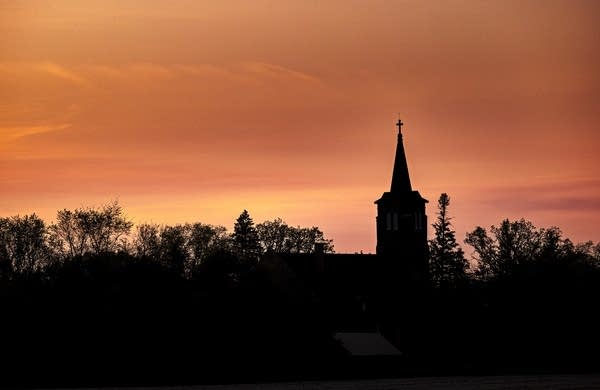
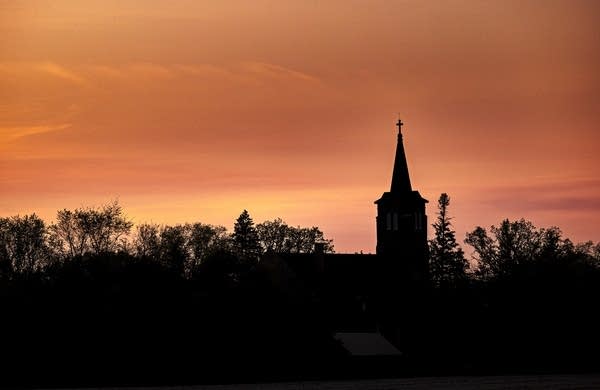
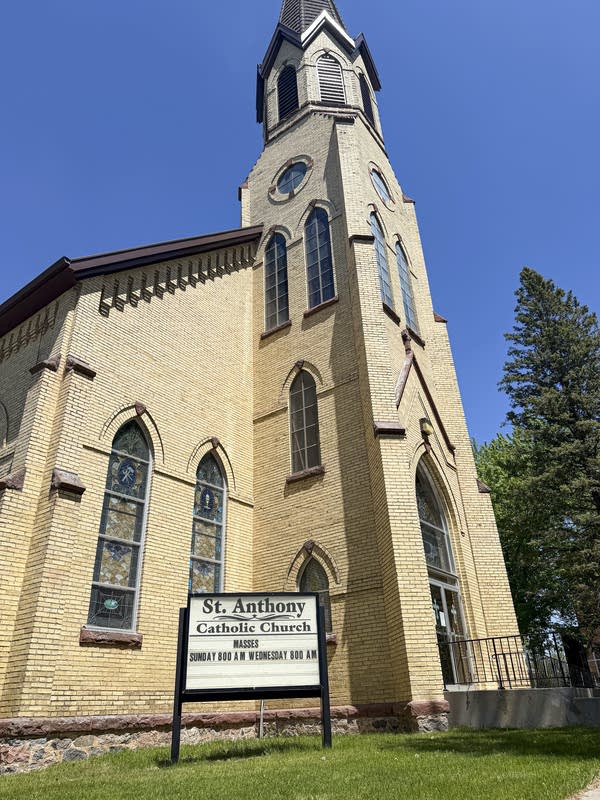
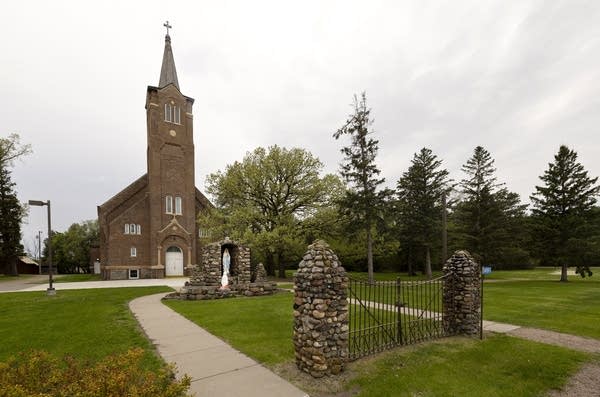
The steeple of St. Anthony Catholic Church rises tall above the tiny town that bears its name.
Built in the 1800s, the stately brick church is the centerpiece of this Stearns County farming community with about 90 residents. Beyond a handful of homes, a bar and a cemetery, there isn’t much else in town.
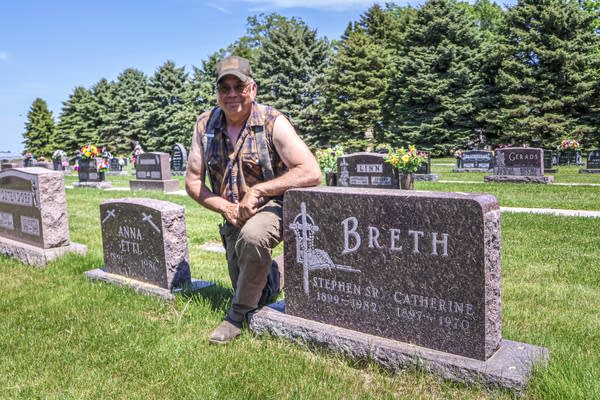
On most Sundays, the pews are at least two-thirds full, said lifelong parishioner Jerry Breth, whose grandparents are buried in the cemetery. Many worshippers linger long after Mass to catch up with their neighbors, he said.
But under a reorganization plan by the Diocese of St. Cloud, St. Anthony would host Sunday Mass only once a month. Breth worries many parishioners will stop coming altogether.
"A lot of people are going to quit church,” he said. “They won't even join another church. They will flat-out quit."
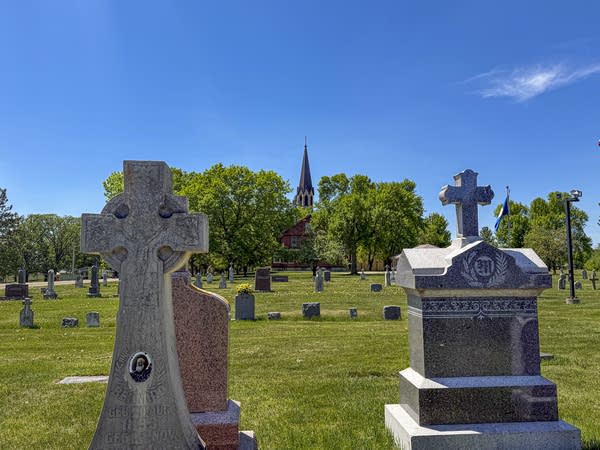
The change is part of the diocese's plan to consolidate its 131 parishes into just 48, a dramatic reshuffling of religious and community life in this historically Catholic region of central Minnesota.
Church officials say a declining Catholic population, lower Mass attendance and a shortage of priests leave them little choice.
The plan is still being rolled out. But it’s expected that some church buildings will close. Others will remain open, but host Masses only occasionally.
Breth said parishioners at St. Anthony will have to drive elsewhere on most Sundays.
"If the church would close, they'd really wreck the community, because we have nothing left,” Breth said. “Because this is it, other than the bar. And I'd rather see the bar close than a church.”
The Diocese of St. Cloud stretches across 16 counties, from Minnesota’s western border to the northern edge of the Twin Cities metro area.
Diocese officials began work on the parish merger plan – dubbed “All Things New” – more than a year ago, driven in part by a shrinking number of clergy.
Three decades ago, the diocese had 97 priests serving 140 parishes. Today, it has about 62 priests for its 131 parishes.
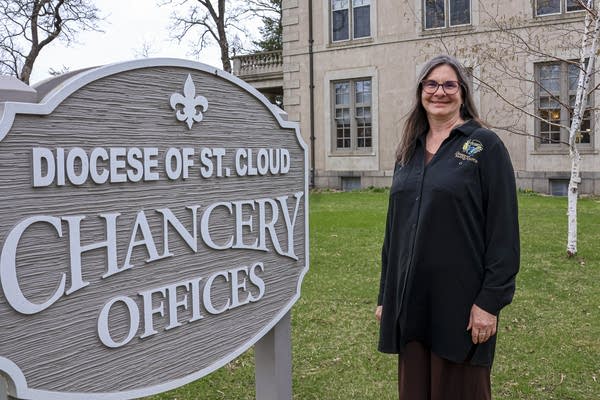
That means priests are stretched thin, often rushing to serve multiple churches, said Brenda Kresky, the diocese’s director of pastoral planning.
"They're ordained to build relationships and be with the people,” Kresky said. “And it's really difficult when you are celebrating Mass and you've got to be at the next location, which is 20 miles away, and you're looking at your clock.”
Currently, each parish operates as its own corporation, with separate finance councils. Combining parishes will help reduce some of the administrative work that priests have to do on a regular basis, Kresky said.
Although many churches will no longer host Mass on a regular basis after the restructuring, Kresky said not all will be closed. Some might be used only for occasional Masses, weddings and funerals, or repurposed into something else, such as an education center. Those decisions will be made separately in coming months and years, she said.
Fewer Catholics attending church less often
The changes also reflect broader religious trends in Minnesota and the U.S.
Across the country, Catholic dioceses are grappling with similar challenges. According to the Pew Research Center, about 40 percent of U.S. Catholics seldom or never attend Mass.
While the population within the St. Cloud Diocese has grown by about 7 percent since 2010, the number of Catholics has fallen from 22 percent to 16 percent, according to diocesan figures. During the same period, Mass attendance has declined by one-third.
Some churches are less than half full on Sundays, Kresky said. At the same time, insurance, maintenance and operating costs continue to rise, she said. And some churches in the diocese are just a few miles or even a few blocks apart.
“We would probably not build the churches in the same places that they are right now, just because of demographics, because we are much more mobile than we were 50 years ago even,” Kresky said.
Some parts of the country are seeing renewed interest in Catholicism. But Kresky said that growth is largely concentrated in the South and West.
"In the Midwest and in the East Coast, you're seeing decline,” she said. “You're seeing restructuring, you're seeing mergers, you're seeing multiple closures."
The Archdiocese of Minneapolis and St. Paul and the dioceses of Duluth and New Ulm have undergone downsizing of parishes in recent years.
‘Sacred spaces’ at risk
For some congregations in central Minnesota, the changes are painful and difficult to accept.
Some parishioners say not all of the churches targeted for closure or reductions are struggling to fill pews or the collection plate.
Karen Pundsack is the pastoral associate at Harvest of Hope Area Catholic Community, which will have a new name – Parish of the Transfiguration – in July. It includes St. Anthony and three other churches.
Pundsack said none of the churches is in financial trouble, and St. Anthony was renovated within the last five years.
“It's not falling down,” she said. “This is a very well-maintained building, and a very well-loved building.”
Many churches in Stearns County were founded by immigrant communities, including German, Polish, Irish and Slovenian settlers who built parishes that reflected their language, culture and identity.
The churches were founded before people living in the area spoke English, so Masses were often said in the immigrants’ native languages, Pundsack said.
Although the churches in Harvest of Hope aren’t far apart geographically, parishioners didn’t want to see any of them shuttered, she said.
“We recognize that there’s real value in the smaller, tight-knit communities in building people’s faith, and we want to continue to maintain that as much as we can,” Pundsack said.
Opposition to plan
Some Catholic parishioners have formed a group that’s pushing back on the plan to merge parishes.
“They've existed for a long time as faithful or sacred spaces where community comes together and shares their faith and their values,” said Jamie Heurung, a parishioner of Our Lady of Mount Carmel in Opole, about 20 miles northwest of St. Cloud. It's on the list of churches that will be used infrequently.
If rural churches close, many people likely will choose another denomination or not go to church at all, rather than travel to a larger parish farther away, Heurung said.
"The desire has been to be close knit for many of us – family centered, friendly, welcoming, and allow us to use our talents, time and treasure as we see fit,” she said. “That's what parish life is."
Some opponents of the diocese’s plan have consulted Philip Gray, a canon lawyer and president of the nonprofit St. Joseph Foundation, which advocates for Catholic parishioners’ rights.
Gray said the Vatican has directed that a scarcity of priests or a temporary financial downturn are not sufficient reasons on their own for a diocese to merge a parish.
“They can't choose to close any parish, even one that's struggling but maintaining itself, just for the sake of the diocese taking their money and using it to get out of debt,” he said.
Gray said bishops across the U.S. are arguing that they need to decrease the number of parishes to become leaner, or build a large church to house people from several parishes. But historically, “the church has always gone to where the people were,” Gray said.
“You may have a single priest who was on horseback doing a 600-mile circuit visiting a dozen different places that were erected as parishes,” he said. “There may only be 50 people there, and he might see them once every six weeks, but he would go to them.”
There is a process for people to appeal the diocese's decisions, first by petitioning the bishop, then appealing to the Vatican. St. Anthony parishioners have already taken the first step.
Kresky said church leaders knew there would be opposition to the plan, and they understand that some people are struggling with the changes.
"In some cases, there are people who, their entire lives, that's where they've gone to church,” she said. “That's where they've met God, that's where their milestones in life have been, their baptisms, their wedding, their funerals. You can't take that lightly."
In many central Minnesota communities, the Catholic church is less of a presence than it used to be, Kresky said. Still, she said, “the presence of Christ is still there.”
“It might have to look different, but that's not gone,” she said.