The end of the mining ban near the Boundary Waters Canoe Area is now official.
President Donald Trump has signed a Congressional resolution that passed the Senate earlier this month on a 50-49 vote, reversing a moratorium on mining on federal land that includes about 350 square miles of the Superior National Forest.
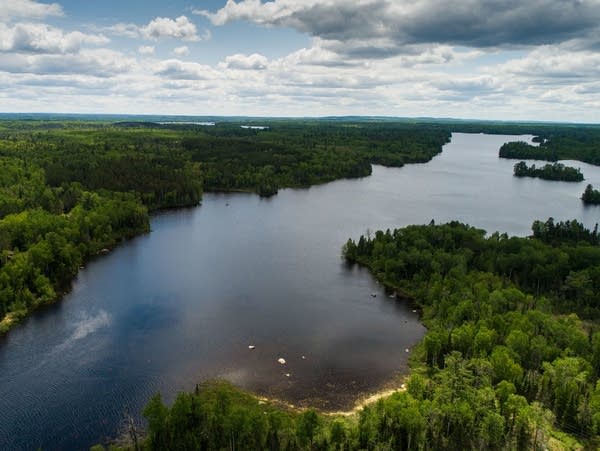
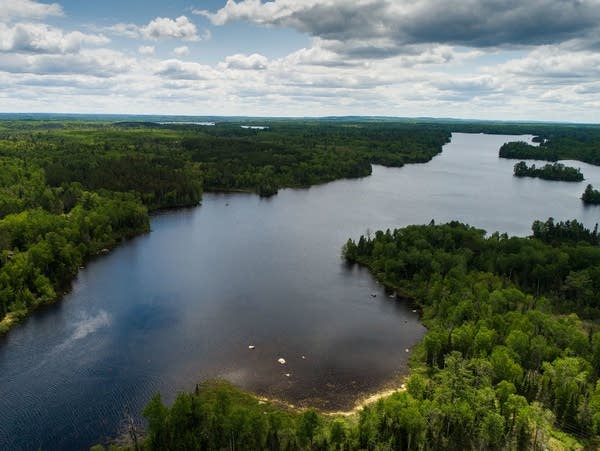
The mining ban spanned an area encompassing the watershed of the Boundary Waters, meaning any water pollution from potential mines in the area could potentially flow into the wilderness area.
When the Biden administration put the ban in place three years ago, it cited concerns that mining could cause irreparable harm to the fragile wilderness of interconnected rivers and lakes that draws canoeists from around the country.
Trump’s signature ends a “reckless policy that sidelined Minnesota’s miners and undermined our nation’s ability to source our own materials,” said Northeast Minnesota Republican Congressman Pete Stauber, who introduced the resolution to overturn the ban.
It relied on the a law called the Congressional Review Act, which allows Congress to overturn executive branch actions with simple majority votes in the U.S. House and Senate, preventing Democrats from using the filibuster to block the legislation.
“Now, proposed mining projects aimed at unlocking trillions of dollars’ worth of critical minerals can move forward through the proper state and federal environmental review and permitting process,” Stauber added.
The move is expected to provide a huge boost to Twin Metals, which is seeking to build an underground mine for copper and nickel near Ely, just outside the Boundary Waters. Twin Metals’ proposed mine is located along the shore of Birch Lake, part of the Kawishiwi River, which flows into the wilderness.
“This decision dismisses outright years of rigorous scientific evidence, the voices of hundreds of thousands of Americans and the clear will of Minnesotans—70 percent of whom support permanent protection of the Boundary Waters,” said Ingrid Lyons, executive director of Save the Boundary Waters.
Attention now shifts to Minnesota. Any mining project in the state would need to undergo environmental review and secure permits from state and federal agencies. That process could take several years, if not decades.