The Trump administration blitz that flooded Minnesota with immigration agents also dramatically slowed other federal investigations and prosecutions into an array of serious crimes, a Reuters review of federal court records found.
New gun and drug prosecutions stalled. Several top prosecutors quit. Some federal agents disappeared from drug task forces and gang cases. Others took the unusual step of bringing their investigations to state authorities.
U.S. President Donald Trump touted the immigration operation as an urgent crime-fighting effort, targeting violent offenders. But the upheaval disrupted the regular work of the federal authorities charged with protecting public safety, according to the records and interviews with 10 current and former officials from state and federal law enforcement agencies.
Between January and the end of April, federal prosecutors charged eight people with gun or drug offenses — compared to 77 in the same period last year, the court records show. Overall, prosecutors charged 90 people with felonies, about half as many as a year earlier.
Those felony cases included 39 people, among them journalist Don Lemon, accused of disrupting a church service during a protest of the immigration crackdown. Another 17 of the total criminal cases involved immigration offenses such as returning to the United States after being deported. The cases don’t include deportation proceedings, which are not criminal and take place in separate immigration courts.
Hennepin County Attorney Mary Moriarty, the top local prosecutor in Minneapolis, told Reuters the local U.S. Attorney’s Office has been so hobbled by departures and diversions to immigration enforcement that U.S. agents have started bringing complex cases to her office instead – a rare tactic for federal investigators.
“You can’t tell me that sex trafficking and drug trafficking and that kind of thing is less important than people going into a church to protest,” Moriarty said. “It’s a public safety issue that they’re not doing the types of prosecutions they should be doing.”
Moriarty declined to identify the cases federal investigators brought to her office out of concern about alienating their agencies.
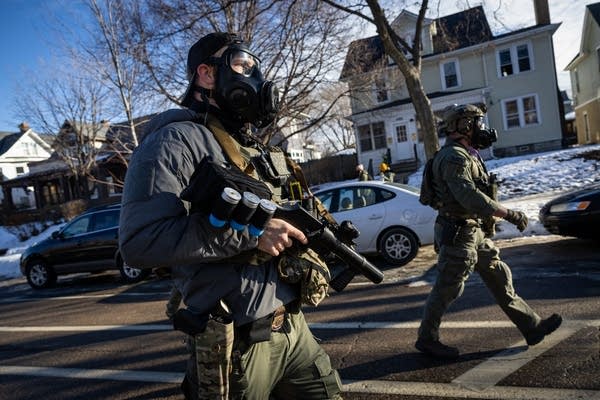
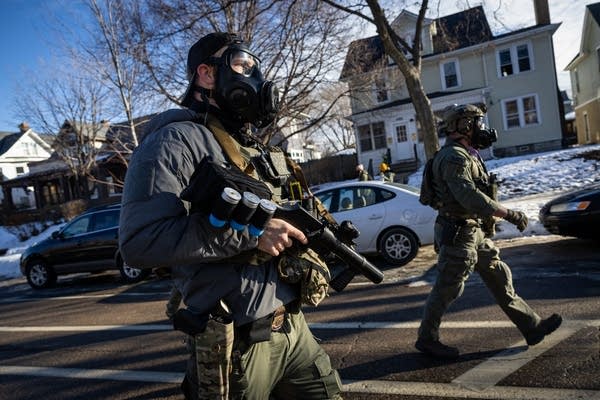
The immigration crackdown became the nation’s latest flashpoint over the administration’s military-style policing strategy as about 3,000 agents swarmed the icy streets of Minneapolis starting in December. Agents pulled people from cars and schools to deport them and fatally shot two U.S. citizen protesters, Renee Good and Alex Pretti, sparking national outrage that eventually led to the administration’s retreat from Minneapolis.
The city’s policing slowdown reflects a larger shifting of U.S. crime-fighting resources to immigration enforcement, often detaining people with no criminal record. Nationwide, the number of people charged with criminal immigration violations last year was the highest in at least two decades, while the number charged with drug crimes was the lowest.
The U.S. Attorney in Minnesota, Daniel Rosen, did not respond to questions about the slowdown.
The Justice Department and the White House did not directly address the court records showing a sharp decline in federal criminal prosecutions so far this year. Justice Department spokeswoman Natalie Baldassarre said “assisting our partners with immigration enforcement has not impacted our ability to investigate and swiftly prosecute other crimes.” A spokeswoman for the White House, Abigail Jackson, said Trump “has taken necessary action in Minnesota to crack down on rampant fraud and illegal immigration.”
Federal help for local crime-fighting ‘not there anymore’
Federal authorities handle only a fraction of U.S. criminal cases but play an outsized role in public safety because they have the time and resources to pursue difficult investigations of the most dangerous criminals. Federal authorities have capabilities to monitor and track suspected criminals that are not always available at the state level, for instance, and can more easily pursue plots across state borders.
State and local authorities rely on the unique resources and reach of their federal partners, said John Marti, a former federal prosecutor who once served as acting U.S. Attorney in Minnesota.
“That’s not there anymore,” he said, because so many attorneys have left and the government has focused so heavily on immigration. The result, he said, will be more violent criminals “who are not apprehended and stopped.”
The change in Minnesota since the immigration crackdown has been so abrupt that it could have a lasting impact on traditional crime fighting, law enforcement officials there told Reuters. One official who participated in the immigration enforcement surge said federal authorities’ ability to pursue violent felons could be hampered for years by the “ripple effects” of the administration’s overwhelming immigration focus.
To examine the impact of Trump’s immigration crackdown on federal law enforcement in Minnesota, Reuters used court dockets from Westlaw, a legal research service. Westlaw and Reuters are both divisions of Thomson Reuters.
The news organization counted cases on the federal district court’s criminal docket, where the most serious matters are filed. It did not count cases brought before federal magistrates, who typically handle lower-level offenses. In some cases, Reuters used artificial intelligence to help categorize the charges people faced. A review of a random set of records showed its assessments to be 98 percent accurate.
Administration officials said the Minneapolis crackdown was needed to deter crime, including a social-services fraud scandal dating back to 2022 that had resulted in prosecutions of many Somali Americans.
But the Reuters review found authorities brought two new wire-fraud cases to court between January and April, neither of which was related to government benefits. Federal and state law-enforcement agencies last week carried out a series of searches in Minnesota of social-welfare organizations that they described as part of a fraud investigation.
Disappearing agents and attorneys
Although Minneapolis does not rank among the most dangerous U.S. cities, federal authorities there had in recent years made battling violent crime one of their top priorities.
Soon after the Minneapolis surge started, local authorities said, some federal agents already posted in Minnesota started disappearing from anti-drug taskforces and helping with immigration enforcement, though they could not say how many. “They’re experiencing significant disruptions because agents are being reassigned,” said Robert Small, the executive director of the Minnesota County Attorneys Association.
Some agents had been diverted from street-crime investigations to immigration before the surge, according to two people familiar with the matter. Agents, they said, often reported being unavailable on some days as they pursued immigration enforcement.
The operation also set off an exodus from the U.S. Attorney’s Office in Minnesota, where several prosecutors left rather than carry out an order to investigate the widow of Good, the woman fatally shot by an Immigration and Customs Enforcement (ICE) agent.
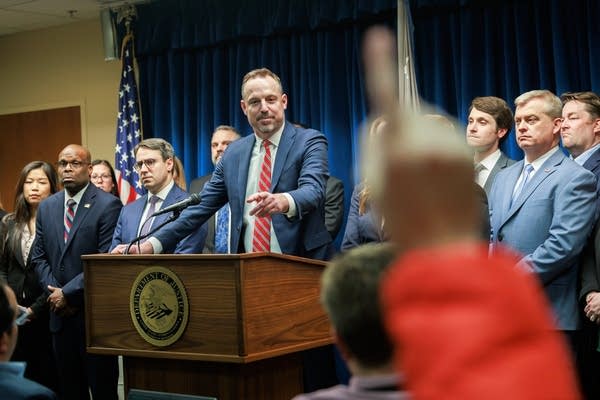
Then more attorneys followed. The rash of departures left the office with about half its usual complement of about 50 attorneys, two people familiar with its staffing told Reuters. Five of the six supervisors in the office’s criminal section left, according to the two people and one additional source, all of whom spoke on the condition of anonymity to discuss internal dynamics.
Since then, the Justice Department has rotated in a succession of military lawyers and prosecutors from other states as temporary replacements.
Still, shorthanded federal prosecutors have struggled to bring new cases — or even manage those launched before the immigration operation. In February, a judge in Minneapolis dismissed a case federal prosecutors filed last year against Tavon Timberlake, who they accused of being a felon in possession of a firearm. After prosecutors missed deadlines, sometimes citing staff shortages, the judge said Timberlake had been denied his right to a speedy trial and ended the case.
Last week, federal prosecutors asked a court for permission to drop their case against a man accused of a carjacking in which two people were killed and a six-year-old child was injured, saying in a court filing that local prosecutors would pursue charges instead.
Even as they struggled to pursue such serious crimes, federal prosecutors found time to arrest and charge dozens of people protesting Trump’s immigration crackdown. In addition to the felony charges related to the protest inside a church, prosecutors charged 40 more people with mostly low-level violations related to clashes with federal agents. They swiftly dropped about half the cases, court records show.
One attorney familiar with the operations of the U.S. Attorney’s Office in Minneapolis described it as severely restricted in its ability to pursue more traditional cases: “They’re just trying to hang on.”
Reporting by Brad Heath in Minneapolis, Andrew Goudsward in Washington and Kristina Cooke in San Francisco; editing by Brian Thevenot