University of Minnesota ICE protesters ask judge to dismiss charges


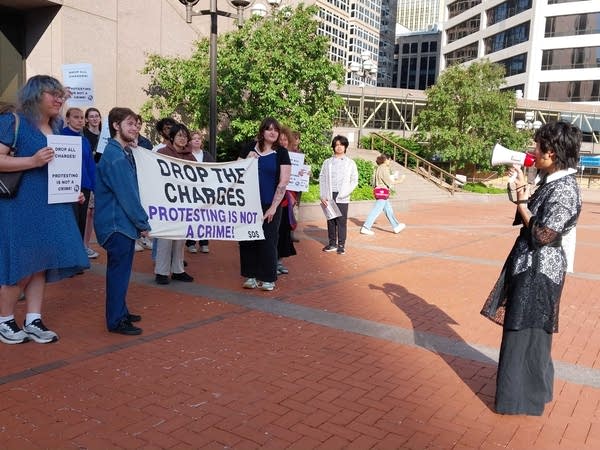
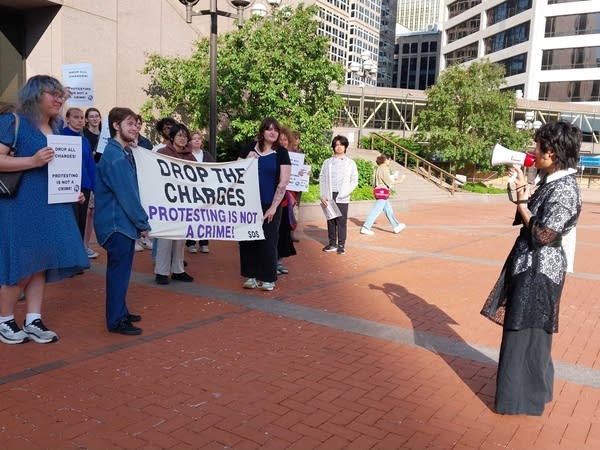
People rallying outside Hennepin County Government Center

A group of University of Minnesota students and graduates arrested for protesting ICE are urging a Hennepin County judge to dismiss the charges against them.

The 27 defendants were arrested by University of Minnesota police in January at a protest outside the Graduate Hotel. Student organizers said they heard from hotel staff and observers that ICE agents were staying in the building, and they staged a noise demonstration outside late into the night.

They are facing state charges for unlawful assembly.

The group appeared in Hennepin County District Court Thursday morning. Attorney Karmen McQuitty, who is representing the group, said in court that she plans to file a motion to have the case dismissed.

“We believe this is a political case,” McQuitty told judge Jennifer Olson during the hearing. “Our clients are on the right side of history.”

On Thursday, prosecutors with the Minneapolis City Attorney’s Office offered to resolve the case for defendants who agreed to complete eight hours of community service and pay $178 in fines. Four of the defendants accepted the offer; the rest will continue arguing their case.

Emil Chu, a 2024 graduate from the U of M, is one of the defendants. He did not take the deal prosecutors offered. He said protesters shouldn’t face charges – and potentially a trial – for opposing ICE’s presence in the city.

“We thought it was highly objectionable that ICE agents were staying so close to our campus, especially since we have a vulnerable population of international students,” Chu said. “Unlawful assembly is not a worthwhile charge that the city should be pursuing and spending city employee time and city tax dollars on.”

McQuitty, an attorney with the National Lawyers Guild, has asked prosecutors to turn over evidence related to the defendants’ arrests, including body worn camera footage and records of any statements defendants made. She filed that request in March; prosecutors have not yet submitted those documents to the court.

Judge Olson set another hearing for July. She asked McQuitty to file a formal motion to dismiss the case before then, and for prosecutors to submit a response.

McQuitty said protesters should not be facing charges for the incident.

“The fact that two ICE agents killed two people, and they aren't facing charges yet, and these young people, who just stood there with whistles and phones and their voices, are being prosecuted, is untenable to me,” McQuitty said.

The city attorney’s office declined to comment on pending litigation.


Source link

Leave a Reply

Subscribe to Our Newsletter

Get our latest articles delivered straight to your inbox. No spam, we promise.

Recent Reviews


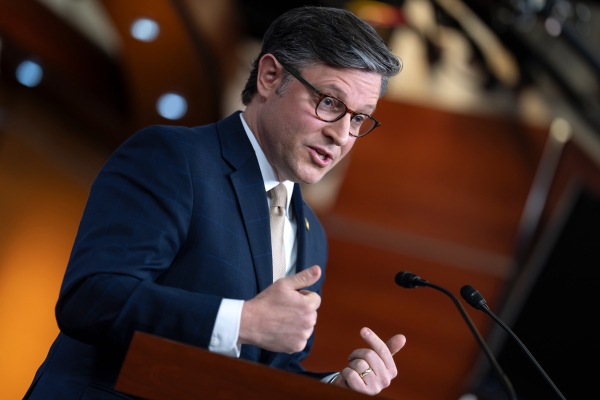
Speaker of the House Mike Johnson, R-La., takes questions at a news conference at the U.S. Capitol on April 21, 2026.

Speaker of the House Mike Johnson, R-La., takes questions at a news conference at the U.S. Capitol on April 21, 2026.
Speaker of the House Mike Johnson, R-La., takes questions at a news conference at the U.S. Capitol on April 21.
J. Scott Applewhite | AP

The House of Representatives voted Thursday to reopen most of the Department of Homeland Security, ending the longest agency shutdown in U.S. history.

The House passed a bill funding DHS, minus dollars for Immigration and Customs Enforcement and Customs and Border Protection. The measure passed by voice vote on what was the 76th day of the shutdown.

Democrats refused to back funding for many of the agency's immigration functions in an unsuccessful effort to secure reforms including body-worn cameras and broad restrictions on face coverings after federal law enforcement killed two American citizens in Minnesota earlier this year.

The Senate, led by Republican Majority Leader John Thune, R-S.D., unanimously advanced this funding legislation in March. At the time, Speaker Mike Johnson, R-La., referred to the proposal as "a joke" and refused to bring it up for a vote. Many members of the House Republican conference refused to fund the agency in a piecemeal fashion and did not want to negotiate over reforms to immigration enforcement operations.

On April 1, Johnson reversed course. He announced the funding bill would be voted on "in the coming days." More than four weeks later, he finally made good on that commitment.

In an effort to appease his hardline members, Johnson waited to bring the Senate's proposal to a vote until that chamber's Republicans started the arcane procedural process, known as reconciliation, to fund all of DHS — including Immigration and Customs Enforcement (ICE) and Customs and Border Protection (CBP) — for the remainder of Trump's term without any backing from Democrats.

The funding bill comes as Secretary of Homeland Security Markwayne Mullin warned the agency was close to running out of funds to pay staff.

"We have reached all the emergency funds we can reach into," Mullin told Fox News on Friday. "I am completely out of the slush fund, I have no place to move at the end of the month."

Mullin said the agency was relying on appropriated funds from last year's One Big Beautiful Bill, which allocated more than $150 billion to DHS on top of its regular annual appropriations funding.

President Donald Trump signed a memo this month authorizing DHS to use some of the money from that legislation to fund the department's operations — potentially infringing on the powers granted to Congress by the Constitution to direct how taxpayer money is spent.

Copyright 2026, NPR


Source link