
The invisible unpaid care economy
Across the world, women carry the largest share of unpaid care work. This labor takes many forms: raising children, caring for elderly relatives, cooking, cleaning, and managing the countless small tasks that keep everyday life running. It often involves long, undefined hours, constant multitasking, and what many describe as the “mental load.”
Because much of this work happens quietly inside homes, societies have become accustomed to it. It is expected, normalized, and too often taken for granted.
The scale of this invisible labor is immense. According to the International Labour Organization, women perform more than three quarters of the world’s unpaid care work, spending on average three times more hours on care responsibilities than men. If assigned a monetary value, unpaid care and domestic work could represent up to 40 percent of GDP in some countries, according to UN Women.

Unpaid care work includes not only physical labor, but also the constant coordination, responsibility, and mental load that keeps everyday life functioning.
This makes unpaid care one of the largest yet least recognized sectors of the global economy.
And yet, because it takes place largely outside markets and inside homes, it does not appear in GDP or labor statistics. Over time, that absence has created not only invisibility, but distortion. Women’s contribution appears far smaller than it truly is, and millions are classified as “economically inactive.” But inactivity is not the right description. The work is there. It requires time, responsibility, organization, and skill. It simply happens outside the way we measure economies.
This is not only a question of inequality. It is also a question of economic mismeasurement.
When measurement fails, reality gets misread
Economic systems rely on what they measure. And what they fail to measure, they fail to see.
Nowhere is this distortion more visible than in regions like the Middle East and North Africa. For years, the region has been defined through what economists call the “MENA paradox.” Despite steadily rising levels of female education, with women now often outnumbering men in universities, official female labor force participation remains the lowest in the world. According to World Bank data, women’s labor force participation in the region averages around 19 percent.
On paper, this suggests that most women are economically inactive. But the reality on the ground tells a very different story.
Economic systems rely on what they measure. And what they fail to measure, they fail to see.
Across the region, women are working constantly — inside homes, in family agriculture, in informal activities, and in community support systems. They are simply working in ways that the formal economy does not capture. This is not a regional anomaly. It is a reflection of how global economic systems define, and limit, what counts as work.
In times of conflict, economic crisis, or displacement, this invisible labor becomes even more essential. When public systems weaken, households absorb the shock, and women often fill the resulting gaps.
Take the example of Samia, a mother of five living in a rural village in northern Yemen. Every day she wakes before sunrise to prepare meals, care for her children, tend the family’s small field, fetch water, and look after her elderly father-in-law. Her husband works as a daily laborer with no stable income, a reality shared by many families across fragile economies.
“I am working all the time. I don’t realize it is work. I just do it,” she says.
Yet none of Samia’s work appears in economic statistics. In official data, she is classified as economically inactive. Her story is personal, but the pattern is structural: labor that sustains families and communities often remains absent from the metrics used to define economic participation.
In these contexts, unpaid care work becomes the shock absorber of last resort. If health services collapse, women become caregivers. When schools close, they take on full childcare and education. As household incomes shrink, they absorb the pressure in ways that are essential to survival, but largely invisible in economic data.
When work is invisible, policy gets it wrong
This is where the issue moves from invisibility to consequence.
When entire forms of labor remain invisible in economic statistics, entire systems of value creation disappear from view. The consequences extend far beyond the numbers. What is not measured is rarely funded, prioritized, or properly understood.
Policies end up being designed around a distorted picture of how economies actually function. Instead of recognizing structural barriers, the conversation often focuses narrowly on “getting more women into jobs.” But the deeper issue is not simply employment. It is how economic systems themselves are designed.
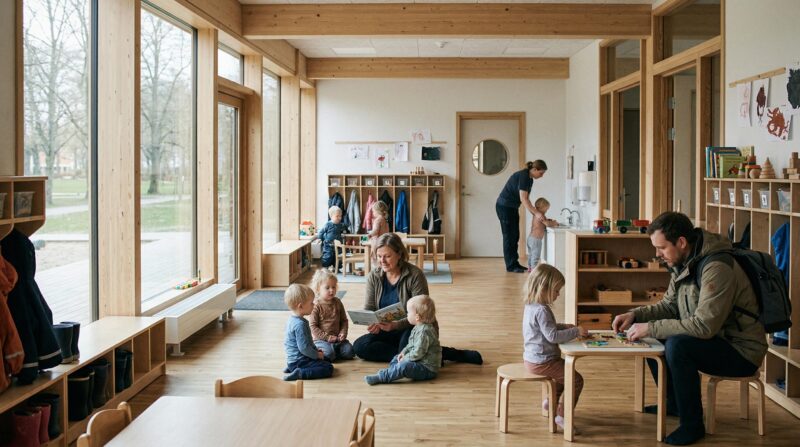
When care is treated as economic infrastructure rather than private burden, societies create the conditions for broader participation and resilience.
Most labor markets were historically built around a model that assumes someone else is providing care — raising children, caring for the elderly, and absorbing the daily shocks of life. For generations, that “someone” has been women.
As a result, care infrastructure — from childcare to eldercare to community support systems — is still too often treated as social spending rather than economic infrastructure.
Care systems — childcare, eldercare, and community health support — are still too often treated as social spending. In reality, they are economic infrastructure.
Yet economies are not sustained by markets alone. They are sustained by the human systems that make markets possible.
Recognizing this reality requires more than symbolic acknowledgment. It requires a shift in how economies measure activity, how institutions define productivity, and how public policy treats care infrastructure.
Addressing this may be one of the most important shifts needed to build more inclusive and resilient economic systems.
A future that counts the full economy
If economies are to become more inclusive and resilient, care can no longer be treated as a private matter. It must be recognized as a foundational pillar of economic life.

What economies fail to measure, institutions often fail to prioritize — shaping policy around an incomplete picture of how value is created.
Promising shifts are already emerging, starting with how we measure economic activity.
Governments can expand the use of time-use surveys, which ask people to record how they spend their day — from paid work to childcare, cooking, cleaning, or caring for elderly relatives. These surveys help make visible the large amount of unpaid labor that traditional statistics overlook. Their results can then feed into satellite accounts, offering a more complete picture of economic activity beyond GDP.
Mexico, for example, has developed one of the most advanced national systems for measuring unpaid household work. According to Mexico’s National Institute of Statistics and Geography, unpaid domestic and caregiving labor represents more than 26 percent of the country’s GDP.
But measurement is only the beginning. The next step is investment in care infrastructure.
Care systems — childcare, eldercare, and community health support — are still too often treated as social spending. In reality, they are economic infrastructure. When these systems are in place, millions of people — especially women — gain the time and flexibility to participate more fully in economic life.
Countries such as Sweden and Denmark offer compelling examples. With strong public childcare systems and generous parental leave policies for both parents, female labor force participation exceeds 70 percent — among the highest in the world.
A third shift lies in rebalancing labor systems more broadly. Policies such as paid parental leave for both parents, flexible work arrangements, and social protection for caregivers can help redistribute care responsibilities more fairly. Iceland provides a notable example. Its “use-it-or-lose-it” parental leave model — in which a portion of leave is reserved exclusively for fathers — has been especially effective in encouraging shared responsibility.
These examples do not offer a single model to copy, but they show that once care is measured, valued, and supported, both economic participation and policy design begin to change.
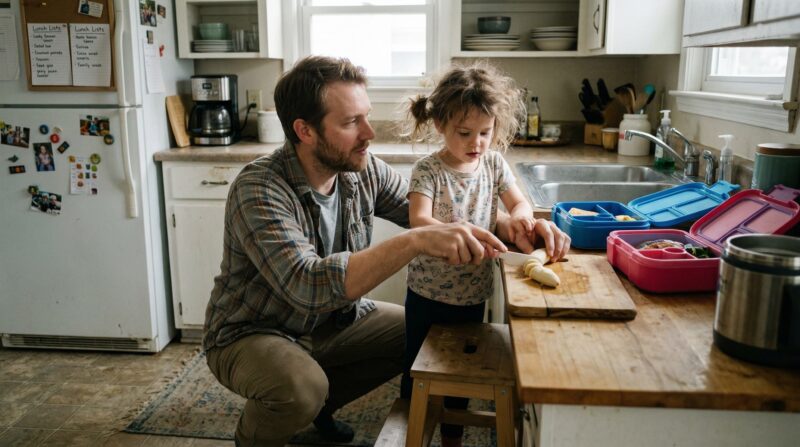
Policies that redistribute care more fairly can begin to shift not only household roles, but the economic systems built around them.
For decades, we have measured economic progress through a narrow lens — counting what is traded in markets while ignoring the labor that sustains life itself.
But the future of more inclusive and resilient economies depends on a broader understanding of value. Recognizing this reality requires more than acknowledging women’s contribution. It requires rethinking how we define work, how we measure economic activity, and how policies are designed.
Once we begin counting the full economy — recognizing social value alongside market value — we can begin to build systems that are more human, more balanced, and more resilient. As the world faces profound social, economic, and demographic transitions, that shift has never been more urgent.