
They did not mean they wanted to stop supporting student learning. Quite the opposite. They continued to value the structure of Haverford College’s Microfinance and Impact Investing Initiative — MI3 — and its learning-by-doing model. What they no longer wanted was continued exposure to the standard angel and venture capital model of early-stage investing.
That moment forced us to confront a question now surfacing across the impact investing field: if the capital structure does not fit the enterprise, the investor, or the impact goal, what exactly are we teaching the next generation of impact investors?
Learning in the room where investing happens
Due diligence presentations on four early-stage social enterprise deals are the capstone of an undergraduate class at Haverford College and the centerpiece of MI3’s impact investing program. The program benefits from a strong relationship with a Hong Kong-based foundation interested in social justice, entrepreneurship, and project-based learning.
After the presentations, students discuss the four deals with an investment advisory council and work toward a consensus investment recommendation to convey to the foundation. The foundation then makes the investment from its own funds. The money never touches Haverford’s soil — very helpfully avoiding Board fiduciary concerns — while still allowing students to experience a real investment process.

MI3’s learning-by-doing model places students close to the real-world messiness of due diligence, investor judgment, and capital allocation.
The program grew out of a collaboration with Investors’ Circle, a national network of angel impact investors, which began more than a dozen years ago after a meeting with John Moore, then head of its IC Philly chapter. After we devised ground rules, IC Philly welcomed MI3’s membership, allowing students to join monthly meetings, observe pitches, and participate in screening and due diligence alongside seasoned angel investors.
Through this exposure, students developed the skills to conduct their own due diligence. Being “in the room where it happens,” they learned firsthand from IC members and observed the sometimes messy flow of the private investment process. They also saw the importance of maintaining relationships with other investor groups, potential investees, and existing portfolio firms.
When the model starts to strain
Eight years in, COVID disrupted everything. IC Philly went remote. Portfolio companies struggled to pivot to new sales channels. Additional shocks tested their resilience. Our partner foundation began to express concerns about the continuing viability of our portfolio.
Capital is not neutral. Its structure shapes enterprise behavior, investor expectations, time horizons, and the durability of impact.
At the same time, IC members had begun questioning the standard angel and venture capital model itself. That model suits a very small, select number of firms. It demands difficult-to-achieve exponential growth, requires funding round after funding round, and often depends on projections of profitability that remain one or two years ahead. Actual exits — the events through which investors get their money back — are rare and often depend on acquisitions that are hard to predict.
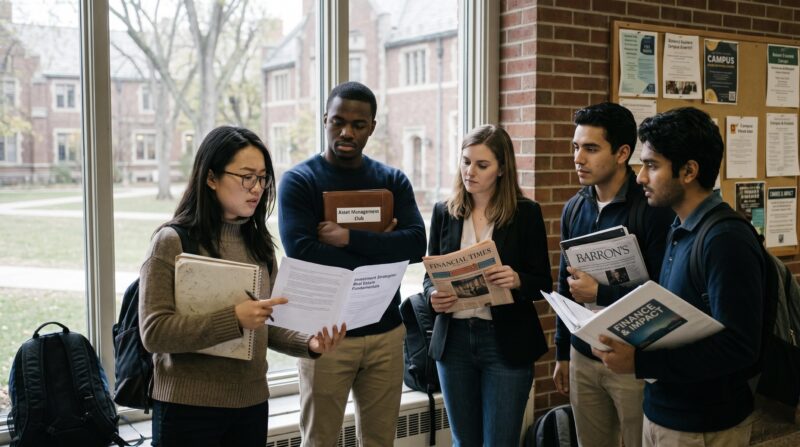
For the next generation of impact investors, the most important lesson may be that capital design is itself an impact decision.
This matters especially in impact investing. Early-stage angel investing is highly risky, and when a startup fails, the impact thesis often fails with it. As one student astutely noted, “There is no impact after startup failure.”
Based on these concerns, Investors’ Circle began expanding the scope of investments it considered. Of particular interest were “alternative exits,” with deal terms designed to produce earlier liquidity. These investments were more appropriate for firms with established revenues, validated business models, and shorter paths to profitability. They were expected to be lower risk and better aligned with sustained impact than the pursuit of moonshot growth.
A pivot toward purpose-suited capital
The foundation’s 2024 feedback became a turning point. Through a series of conversations, MI3 determined that while the foundation still supported the class structure and its learning-by-doing focus, it was no longer interested in the standard angel/VC model of investing.
Preparing the next generation of impact investors requires more than teaching students how to assess ventures.
Drawing on Investors’ Circle’s own explorations, MI3 proposed shifting toward alternative exit terms for investments focused on social enterprises with track records of revenue, proven business models, and earlier paths to profitability. This aligned with the foundation directors’ own business experience, and they agreed to continue supporting the program.

The shift toward purpose-suited capital begins not only in portfolios, but in how the next generation studies the relationship between finance, enterprise, and impact.
The pivot required us to rethink not only what kinds of deals students would evaluate, but what kinds of enterprises and capital structures belong in an impact investing classroom. MI3’s legacy pipeline had been focused on the traditional angel/VC model and needed to broaden. Fortunately, Investors’ Circle had begun bringing both debt and revenue-based financing deals to its members and continued to be a useful source of deal flow.
We also found additional deals to screen from Beneficial Returns, which focuses on debt; Slow Money NYC, which works with revenue-based structures; and Africa Eats, which offers equity in profitable African agriculture and food firms via the Mauritius Stock Exchange. We continue to look for collaborators and co-investors who can help students see a wider spectrum of investment possibilities.
Teaching the capital stack, not just the pitch deck
Two years on, the classroom now includes discussion of an expanded spectrum of entrepreneurial models and the different types of funding that match their needs. Students still learn due diligence, but they also learn that capital is not neutral. Its structure shapes enterprise behavior, investor expectations, time horizons, and the durability of impact.
That may be the most important lesson. Preparing the next generation of impact investors requires more than teaching students how to assess ventures. It requires helping them understand how different capital structures can either support or undermine the impact those ventures are trying to create.
Impact investing is not simply about choosing better companies. It is about designing better relationships between capital, enterprise, and impact.
MI3’s impact investing program is now thriving on new deal structures and is closer to its goals of perpetuity and self-funding. But our experience also reflects a broader evolution across the field. As impact investing matures, investors are increasingly recognizing that the dominant startup finance model is not always the right fit for enterprises designed to produce durable social and environmental value.
Our partnerships with the foundation and with Investors’ Circle enabled MI3 to pivot. They will also continue to drive our adaptation. For students, that ongoing evolution may be the most valuable education of all: impact investing is not simply about choosing better companies. It is about designing better relationships between capital, enterprise, and impact.
—
Disclosure: The author directs Haverford College’s Microfinance and Impact Investing Initiative and teaches the impact investing course discussed in this article.