
Some of that hype has been self-generated. Expectations have also been inflated by actors without much real experience in these markets. Five years ago, demand for carbon credits was projected to reach $50 billion by 2030 — a prediction that implied roughly 50-fold growth in less than a decade. Instead, the market hit a high point of about $2 billion in 2021 before entering a prolonged, still-unfolding restructuring process meant to shake out low-quality credits.
Biodiversity markets are a more recent subject of breathless projection. McKinsey has forecast $2–7 billion in demand by 2030. Yet three years after COP15, we still have only a scattering of successful projects globally — and ongoing debate about whether “biodiversity units” are even a coherent concept.
In practice, actual success is strongly correlated with stable policy and market infrastructure, clear demand, credible additionality, and developer innovation in accessing and combining revenue streams. Absent those conditions, projects have often realized relatively small revenues, relied on philanthropic support or corporate sustainability budgets, or concluded simply: this isn’t for me.
But the core currency of environmental markets — verified ecological outcomes — is real. And it is increasingly valuable even where credit markets themselves are not yet viable.

In climate-smart forestry, verified carbon outcomes can strengthen project finance while supporting longer rotations and more sustainable land management.
For impact investors and land-based enterprises, the question is no longer whether nature credits will become a giant commodity market. It is whether verified ecological outcomes can redirect capital toward regenerative land use, improve risk allocation, and make transition pathways financeable.
That matters because nature-related pain points for companies and investors are real and growing. Companies need to meet climate and nature commitments. Corporates must manage supply-chain risks. Asset owners facing inflation and volatility are looking more seriously at land investments. Fundraising for natural capital is at record levels. Institutional investors are increasingly taking nature risk seriously. Meanwhile, a growing number of high-net-worth individuals — increasingly women, who tend to invest differently — want to put capital to work in ways that align with their values.
Land managers who understand how verified ecological outcomes function within capital structures have opportunities in this transition.
Nature outcomes do not need to become a massive commodity market to matter. They need to be credible, verified, and useful within real capital structures.
Verified outcomes from sustainable agriculture, forestry, conservation, and ecological restoration do not only enable land managers to sell carbon or biodiversity credits. They can serve as collateral backing loans, revenue streams servicing debt, or attribution mechanisms for investors seeking to demonstrate progress against ESG commitments. That can help operators make the transition to regenerative and sustainable systems — or support existing operations that are already nature-friendly but not presently rewarded for it.
Let me count the ways
Verified outcomes as revenue
If this were a 1970s country track, it would be “The Gambler.” Kenny Rogers charted more than 100 hit singles across multiple genres, but there’s only one most people can name. In nature markets, that song is carbon credits.
The basic model is familiar: land managers receive cash flows in exchange for delivering certain ecological outcomes. A landowner might sell carbon credits or biodiversity units, or contract with a single buyer — say, a downstream water utility worried about water quality.
Verified outcomes as credit enhancement
Credit enhancement means the ecological outcome helps make the deal happen in the first place, or makes it more attractive.
Future carbon credits can back a loan, similar to how future crop revenues might support agricultural lending. A corporation might pre-commit to buying regenerative commodities from a producer, giving banks confidence to lend. Or additional carbon revenue might make a sustainable forestry operation financially viable when timber revenue alone would not pencil out.
Verified outcomes as compliance gates
Compliance gates work differently. Here, ecological outcomes control whether money flows into or out of a deal, without necessarily being packaged as something to sell.
A company might fund regenerative agriculture in its supply chain because it needs those emissions reductions for its own climate reporting. Farmers may receive premium payments only if they maintain practices that generate specified environmental benefits.
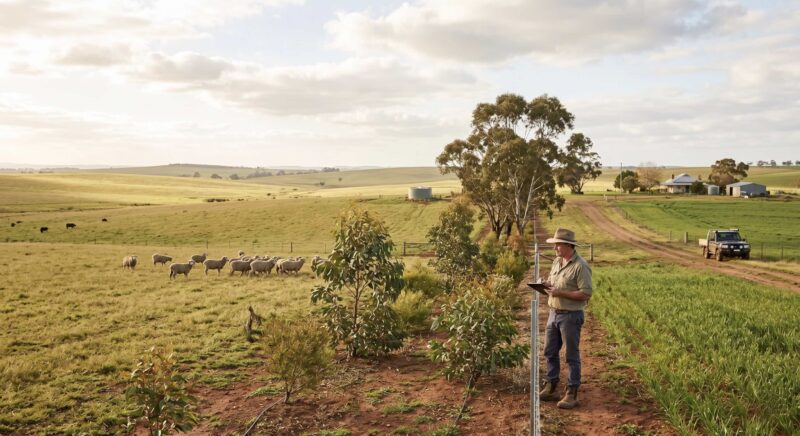
For farmers, future carbon outcomes can improve creditworthiness and help make native reforestation financially viable alongside existing agricultural income.
In other words, you do not need a liquid, scaled commodity market for ecological outcomes to be valuable. You need those outcomes to solve a real problem for someone willing to pay.
What this looks like in practice
EFM Olympic Rainforest: Climate-smart forestry plus carbon
The players: Private equity fund EFM Fund IV, institutional investors including Climate Asset Management and Microsoft’s Climate Innovation Fund, and corporate buyers Meta and Microsoft, which signed long-term offtake contracts. Debt financing is backed by timber and carbon revenues.
How outcomes work: Meta and Microsoft committed upfront to buy carbon credits for more than 10 years. Those purchase commitments enabled EFM to acquire 68,000 acres in Washington and shift from industrial logging to longer rotations and more sustainable forestry practices. Once operational, carbon credits will generate additional income on top of base timber revenues.
In this case, verified carbon outcomes work in two ways: as credit enhancement, making the acquisition possible, and as cash flow once the forest begins generating credits.
You do not need a liquid, scaled commodity market for ecological outcomes to be valuable. You need them to solve a real problem for someone willing to pay.
What makes it work: Meta and Microsoft are creditworthy buyers, so banks trust those future revenue streams. Insurance protects against fire and disease. Multiple revenue sources mean that if carbon prices drop, timber revenue can pick up some slack.
The catch: Carbon accounting methodologies for improved forest management have faced criticism over inflated baselines. The methodology was updated in 2024 to address this, but scrutiny remains. Pacific Northwest wildfire risk is also real and growing, although mechanisms such as insurance and buffer pools have evolved to help manage reversal risks from unforeseen events affecting carbon stocks.
Rabobank / CEFC Environmental Plantings Loans: Native reforestation
The players: Australia’s government-owned Clean Energy Finance Corporation backs Rabobank with a $200 million facility. Rabobank lends to farmers, who contribute land, labor, and existing farm operations.
How outcomes work: Farmers establishing native forests on their land receive a 1.15% discount on loans for three years. The future carbon credits they generate — known as ACCUs in Australia — are not treated as formal loan collateral, but they improve the farmer’s creditworthiness.
What makes it work: Government backing reduces interest costs. Farmers still rely primarily on regular farm income from livestock or crops, with carbon as upside. Australia’s regulatory framework is comparatively stable and well established.
The catch: Carbon prices can be volatile. Trees can fail because of drought, fire, or pests. Farmers are also signing up for a 25-year permanence obligation. If the trees die or are cleared, they may owe the carbon back. That is a long time horizon with real risk.
Forest Resilience Bond: Forest restoration and wildfire risk mitigation
The players: Private investors, including foundations and institutional asset managers, provide upfront funding for forest restoration through a special purpose vehicle run by Blue Forest Conservation, a nonprofit. Repayment comes from a mix of beneficiaries: water and electric utilities, state agencies such as CAL FIRE, the U.S. Forest Service, and corporations such as PepsiCo.
How outcomes work: Overgrown Forest Service lands create wildfire risk. Blue Forest arranges financing to thin forests and reduce fuel loads. Downstream water utilities benefit from reduced sediment washing into reservoirs. Electric utilities benefit from lower wildfire risk to infrastructure. Each beneficiary pays according to the value it receives. The first project, Yuba I, a $4.5 million transaction, was completed and fully repaid in 2023.
What makes it work: Multiple beneficiaries share costs. Utilities are regulated entities with steady revenues, making them reliable payers. Benefits are quantified upfront; one analysis identified more than $40 million in water benefits alone from forest treatments. Forest Service partnership helps ensure the work gets done.
The catch: If a key utility pulls out midstream, a funding gap appears. Natural disasters may still damage treated areas despite mitigation work. Some ecosystem benefits, such as improved wildlife habitat, are difficult to monetize and therefore do not fully factor into the payment structure, even though they are real.
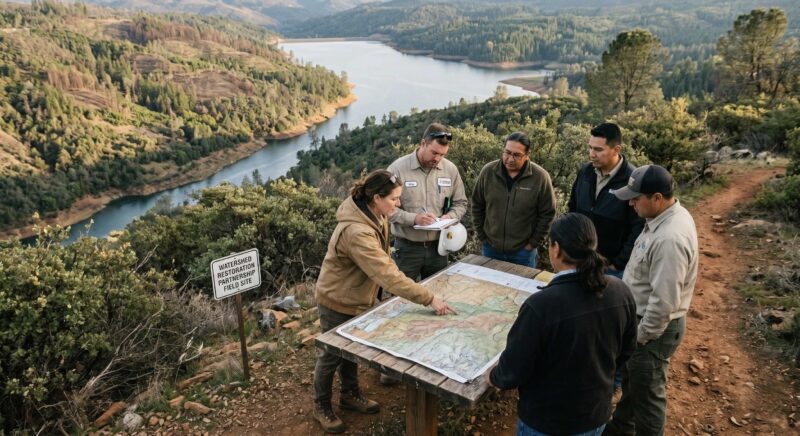
Models like the Forest Resilience Bond show how multiple beneficiaries can share the costs of ecological restoration when outcomes are measurable and valuable.
Cargill RegenConnect: Regenerative agriculture in supply chains
The players: Cargill funds the program from corporate sustainability budgets. Farmers in Cargill’s supply chain, primarily corn, soy, and wheat producers, participate.
How outcomes work: Farmers receive payments — around $35 per ton as of 2024 — if they adopt and maintain climate-friendly and regenerative practices such as cover cropping, reduced tillage, and improved nutrient management. Crucially, the carbon outcomes are not sold as credits. Cargill uses them in internal accounting against its Scope 3 emissions footprint.
Cargill needs to reduce supply-chain emissions to meet Science Based Targets, and that need unlocks the funding in the first place.
What makes it work: Cargill already has supply relationships with these farmers and buys their grain. That existing relationship makes trust and enforcement easier than in a standalone carbon project. Geographic diversification spreads risk. Payments are based on practices — did the farmer plant cover crops? — rather than exact carbon tons, keeping measurement costs down.
The catch: What happens when contracts end? Do farmers revert to old practices, releasing the carbon? Are they adopting practices they would have used anyway? Corporate supply-chain emissions accounting is also still evolving, so what counts today may not count tomorrow under tighter rules.
Know when to fold ’em
This space carries real risks. Benefit-sharing with local communities matters. Measurement and permanence require third-party verification. Additionality and double-counting remain persistent concerns.
The core currency of environmental markets is not the credit itself, but the verified ecological outcome behind it.
These issues are covered extensively elsewhere, and standards are still evolving. The point here is not to minimize those concerns. It is to show that while the integrity conversation continues, sophisticated capital structures are already emerging — and land managers have more options than they may think.
What’s next
The examples above are innovative by design. More initiatives like them will require continued investor education, smarter capital architecture, better liquidity, and more aggregation in still-fragmented markets.
They also demonstrate that new thinking in nature finance does not have to abandon traditional finance. Many of these models are grounded in familiar concepts: offtake agreements, collateral, risk-sharing, beneficiary payments, and revenue diversification. What is new is the use of verified ecological outcomes to make regenerative land use more financeable.
Other models are also emerging. Outcome-stacked project finance models such as Nattergal in the UK; blended structures in which philanthropic capital takes ecological returns while commercial capital takes financial returns, as in the Rhino Bond; and optional upside structures where carbon or biodiversity revenue provides a sweetener rather than the base case, as in New Forests’ Australia / New Zealand fund, all point toward a more varied future.
Bioregional and relational finance models are also beginning to reimagine capital architecture in ways not fully captured here.
The takeaway is simple: nature outcomes do not need to become a massive commodity market to matter. They need to be credible, verified, and useful within real capital structures.
When that happens, ecological outcomes can move from being a hoped-for environmental benefit to a practical mechanism for unlocking capital, sharing risk, and financing the transition to regenerative land use.
For deeper analysis, including detailed risk matrices and additional case studies, see the full resource here.