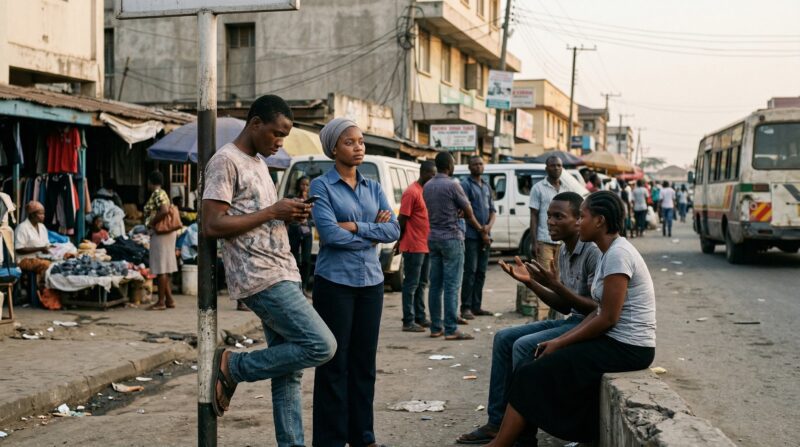
Youth inequality is often described as a generational crisis or a social challenge requiring charity or incremental reform. That framing understates the problem. What millions of young people are experiencing today is not a failure of ambition or effort. It is a failure of system design. Education systems, labor markets, financial institutions, and public policy have evolved in silos, producing misalignment rather than opportunity. For impact entrepreneurs, that failure is not only a moral concern. It is a sign of profound market inefficiency and unrealized human potential at scale.
When education no longer delivers opportunity
For many young people in the Global South, inequality begins long before they enter the labor market. The World Bank estimates that 70 percent of children in low- and middle-income countries cannot read and understand a simple passage by age 10 — what it calls “learning poverty.” In sub-Saharan Africa, only 2 percent of children under five grow up with three or more books at home, limiting early cognitive development and narrowing future opportunity well before adolescence.
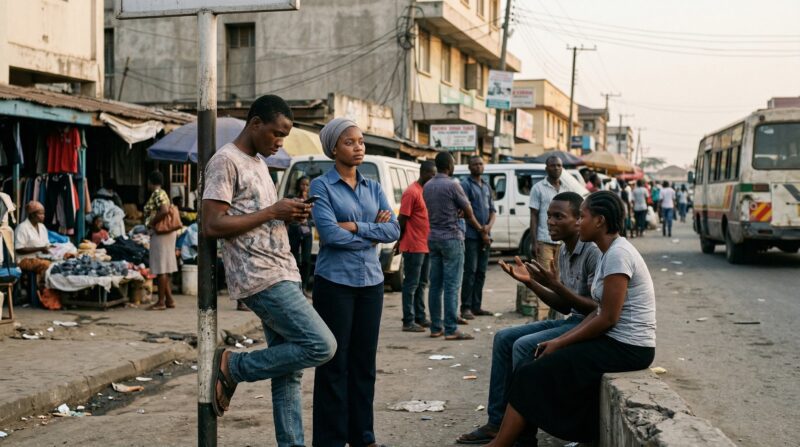
When institutions stop delivering credible pathways into work and mobility, youth exclusion becomes more than an economic problem — it becomes a test of the social contract.
These early gaps compound over time. In Morocco, longitudinal research shows that children from poorer households are far less likely to complete secondary or tertiary education, sharply reducing their chances of accessing formal employment and upward mobility. In South Africa, studies of regions such as Nqabane describe a “triple challenge” of poverty, inequality, and unemployment that traps young people in cycles of exclusion.
Even when education is completed, the promise of mobility often fails to materialize. Across Africa and Asia, employers consistently report difficulty finding job-ready candidates, while young graduates report difficulty finding work. This mismatch is not accidental. It reflects education systems that still prioritize credentials over capabilities and operate too far from labor-market demand.
Youth unemployment, NEET status, and social disillusionment
The most visible expression of this misalignment is youth unemployment and underemployment. According to the ILO’s Global Employment Trends for Youth 2024, young people are three times more likely to be unemployed than adults globally, and those who do find work are far more likely to be employed informally, with low pay and no social protection.
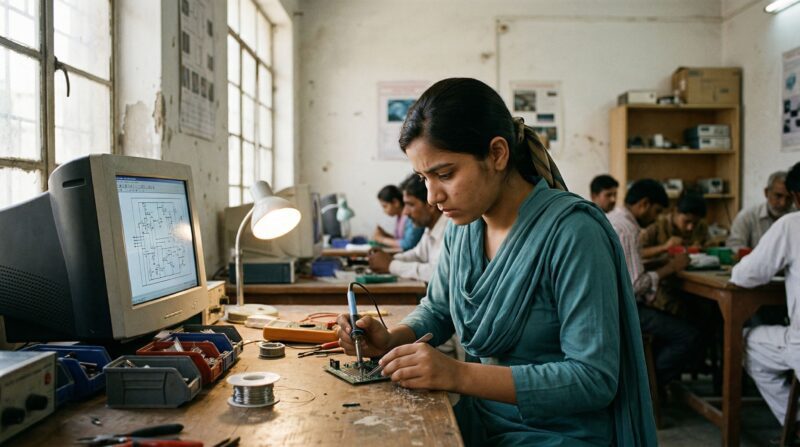
Skills matter, but skills alone are not enough. Training creates real possibility only when it connects to employers, capital, and viable pathways into decent work.
In India, the scale of the challenge has placed youth employment at the center of public debate. The India Employment Report 2024 found that young people account for nearly 83 percent of the country’s unemployed population, and that unemployment is highest among those with secondary or higher education. As The Hindu noted in its editorial coverage, graduates face unemployment rates nearly nine times higher than illiterate youth, revealing a stark disconnect between education and opportunity.
Equally troubling is the growth of young people classified as NEET — not in education, employment, or training. In India alone, an estimated 103 million youth fell into this category in 2022, roughly one in three young people. Nearly 85 percent were young women, many excluded from the labor force by unpaid care responsibilities and restrictive social norms. International evidence shows that prolonged NEET status is strongly associated with long-term income loss, poor health outcomes, and weakened civic participation.
Youth inequality across Africa and Asia is not inevitable. It is the predictable outcome of systems that fail to link education, employment, and opportunity in equitable ways.
Across Africa, this economic exclusion has increasingly translated into political expression. Youth-led protests in Kenya, Nigeria, Uganda, Senegal, and South Africa throughout 2024 were widely reported as being fueled by high unemployment, rising living costs, and frustration with institutions that no longer seem to deliver opportunity. These movements signal something deeper than momentary unrest. When young people cannot see a future worth investing in, the social contract itself begins to erode.
Youth inequality as a system design failure
Taken together, these patterns point to a structural problem rather than a series of isolated failures. Youth inequality is actively reproduced through the interaction of four poorly aligned systems:
- Education systems that do not equip young people with labor-market-relevant skills
- Labor markets that offer too few formal entry points for first-time workers
- Financial systems that restrict access to capital for young entrepreneurs
- Public policies that treat youth as dependents rather than economic actors
The result is wasted human potential on a massive scale — a demographic dividend transformed into a demographic liability.
For impact entrepreneurs, recognizing youth inequality as a system failure changes the question from How do we help young people? to How do we redesign the systems around them?
What is beginning to work
Evidence from across the Global South suggests that outcomes improve when interventions reconnect systems rather than operate in isolation.
A major quantitative review published in World Development found that youth-targeted active labour market programmes improve employment outcomes, particularly when they combine skills training with real work experience and employer engagement. Programmes that operate as bridges between education and labor markets consistently outperform classroom-only interventions. In Senegal, for example, apprenticeship-based employment support programmes improved job quality and earnings for young participants, demonstrating the value of work-linked learning in contexts where formal jobs remain scarce.
India illustrates both the promise and the limits of large-scale skilling. According to The Economic Times, the share of “employable” final-year students increased from 33.9 percent in 2014 to more than 51 percent in 2024, reflecting progress in vocational and digital training. But nearly 90 percent of employment remains informal, and women’s labor-force participation remains dramatically lower than men’s. The lesson is not that skilling fails. It is that skills alone are insufficient. Without employer pipelines, capital access, and formal job creation, training programs cannot deliver lasting inclusion.
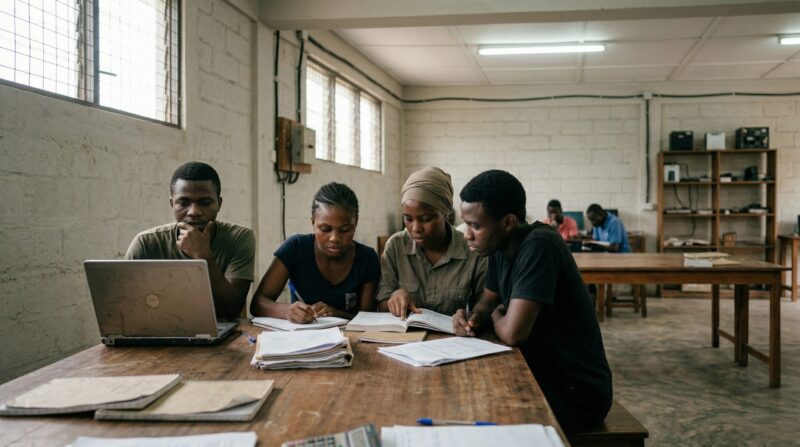
Youth inequality is not simply about individual effort. It emerges where education, work, finance, and policy fail to connect — leaving millions of young people stranded between schooling and opportunity.
In Uganda, the UNDP–Refactory Skills for Digital Jobs Initiative offers a more integrated model. The program trained youth in software development, AI, and cloud technologies while pairing technical learning with career support and employer engagement. Early tracking showed nearly half of graduates moving into employment, internships, or entrepreneurship, underscoring the value of demand-driven, industry-linked skilling.
The Opportunity 2.0 program in the Philippines focused on strengthening the Alternative Learning System, integrating employability skills, and creating local Youth Development Alliances involving employers and city governments. By embedding reforms within public institutions rather than creating parallel systems, it helped shorten school-to-work transitions at scale.
In Bangladesh, UNDP’s SWAPNO II program targeted rural young women through skills training, apprenticeships, and financial literacy. Many participants secured formal employment or launched enterprises, increasing both income stability and agency in a context of deep gender inequality.
For impact entrepreneurs, recognizing youth inequality as a system failure changes the question from How do we help young people? to How do we redesign the systems around them?
UNESCO’s youth strategy points to another design principle that matters across all of these cases: young people must be co-creators of solutions, not merely beneficiaries of them. For more than two decades, UNESCO has supported youth-led initiatives, strengthened youth capacities, and created dialogue spaces between young people and policymakers. The underlying premise is simple but important: youth are not just recipients of development. They are actors, leaders, and partners in it.
What this means for impact entrepreneurs
For the Impact Entrepreneur audience, the implications are clear. Youth inequality signals market failure, not a lack of talent. The most effective responses connect systems rather than add programs. And there is growing room for ventures that build skills-to-jobs pipelines, apprenticeship marketplaces, youth-inclusive finance models, labor-market data platforms, and other forms of enabling infrastructure.

System redesign becomes real when schools, employers, public institutions, and local ecosystems begin to work together instead of operating in isolation.
Youth represent one of the largest untapped sources of productive potential in the global economy. Unlocking that potential will require moving beyond fragmented interventions toward system redesign.
From diagnosis to design
Youth inequality across Africa and Asia is not inevitable. It is the predictable outcome of systems that fail to link education, employment, and opportunity in equitable ways. Evidence — from India’s employment paradox to Africa’s youth protests — shows what happens when those systems break down. Emerging models also show what becomes possible when they are rewired.
For impact entrepreneurs, investors, and ecosystem builders, this is not simply a social challenge. It is one of the defining design problems of our time — and one of its greatest opportunities.