

When state Rep. Peggy Bennett heard Hannah LoPresto’s story of surviving what a police investigation described as a “pattern of predatory grooming” by a former high school teacher, the Republican lawmaker from Albert Lea knew she had to do something.
“It really brought back memories for me from quite a few years ago,” Bennett told fellow legislators this month. “When I was a 10th grader in high school, I was groomed by my band director. And I just thought, ‘You know what? I think it’s time I tell my story too because I really haven’t shared it with many people.’”
Bennett worked with LoPresto to craft a bill addressing some of the gaps in Minnesota’s system meant to prevent misconduct, grooming and abuse in schools.
She has found support from colleagues on both sides of the aisle. For many of them, addressing abuse and misconduct is something that’s personal.
Sen. Erin Maye Quade, DFL-Apple Valley, is sponsoring the companion bill to Bennett’s in the Senate.
“It doesn't surprise me that there are women leading this bill. Of course, men and boys are predated on by adults, that absolutely happens, but women and girls experience it so early and so consistently throughout their entire lives,” Maye Quade told MPR News. “There’s always that experience, that life experience that I think can bring us together on this issue in a way that maybe other issues, we don't find that alignment.”
The bill would make grooming a felony and ban teachers from being alone with students on field trips. It would also require the state education department to develop new mandatory reporter training to help school staff identify grooming.
Maye Quade is one of many who believe more steps are necessary to truly protect students from grooming.
“This is one of those issues that continually comes up, and until we dedicate as much prevention and training and prosecutorial resources to child sexual abuse, child sex trafficking, the sexualization of children…we're going to keep doing piecemeal things,” Maye Quade said. “This is a very, very, very good step, but this is part of a much broader issue.”
Maye Quade supports legislation to raise the age of consent in Minnesota to 18. She and Rep. Sydney Jordan, DFL-Minneapolis, also want to see Minnesota’s new K-12 health standards, which include abuse prevention education, move forward.
“The very first bill I ever presented in the Minnesota Legislature was on comprehensive sex education and consent education in Minnesota schools. And that is because I heard from people — from girls, especially and from students — that they didn't have access to that information in schools,” Jordan said.
Bennett also believes students should receive age-appropriate sex education that includes abuse prevention. For her, the experience of what happened to her in high school is not one she wants anyone to go through again.
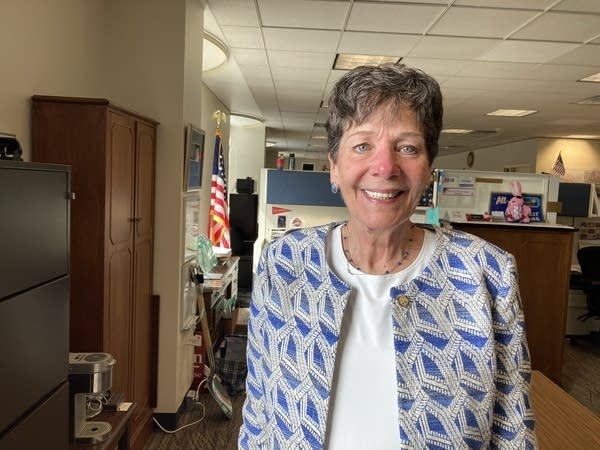
“I was a lonely kid, you know, a 10th grader and this person took advantage of it, and it wasn't my fault, but back then … you just feel kind of shame about it,” Bennett told MPR News.
She said that LoPresto’s courage in publicly sharing her story inspired her to take action.
“I think a lot of women and girls are the same as me. You feel shame. You feel like, ‘Oh, how did I let that happen to me? I must have done something to encourage that.’” Bennett said.
“Frankly, I was really shocked to learn that this is still an issue,” she added. “It was an issue when I was in high school, and it still is one. And so it's time to strengthen our laws and guardrails here so that we can help prevent this from happening to young people.”
Earlier this year, Bennett introduced legislation that would have made K-12 health education, including comprehensive sex education and abuse prevention education optional for Minnesota districts to teach. The bill did not make it out of committee.
When asked about the contradiction, Bennett told MPR she believed abuse-prevention education should be a required subject in schools but she was concerned about other aspects of sex education.
“Abuse is the abuse of sex, and kids need to understand what that is. Then there's the whole if you have sex, when you have sex, what do you do?” she said. “I personally believe that belongs in the local hands, because it's a very sensitive issue.” She said she was also concerned about adding another teaching mandate to educators’ plates.
The vast majority of child sex abuse that happens does not occur in a school setting. Still, child abuse at the hands of an educator is not outside the norm for American students.
A study published in 2022 found rates of child abuse by educators affected nearly 12 percent of the almost 7,000 students surveyed. The vast majority of abusers were male and academic teachers and the vast majority of students experiencing the misconduct were female. Only four percent of those abused reported their experiences.
Bennett and Maye Quade’s companion anti-grooming bills have made it through several committees with broad bipartisan support.
In a recent hearing, Bennett and LoPresto told lawmakers they’d received many communications from Minnesotans sharing their own stories of grooming from people in positions of power.
“We all know someone right?” said Rep. Kelly Moller, DFL-Shoreview. “Brave survivors come to the Capitol and share their stories in order to close gaps in the law. Can't impact your case, but it makes it better for the next people, and hopefully prevents some further assault.”