For many rare conditions, the scientific promise of treatment existed, but the economics often did not. Each disease affected too few patients to justify the enormous costs of research, clinical trials, regulatory approval, and commercialization on a traditional pharmaceutical model. Even when a therapy had meaningful medical potential, the addressable market was often too narrow for companies and investors to take on the risk of developing it.
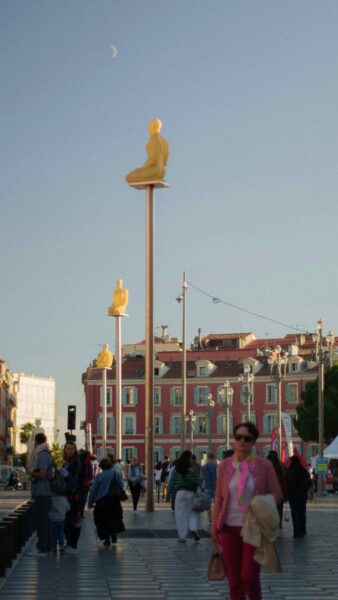
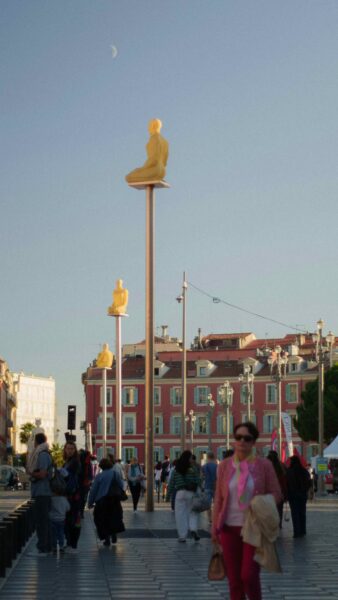
Cultural infrastructure can shape the social and economic conditions that allow neighborhoods to remain vibrant, livable, and investable over time; Image by Sobolev Maksim
That story began to change through a combination of regulatory incentives, scientific advances, patient advocacy, and financial innovation. One important tool was portfolio logic: by bundling multiple rare disease drug candidates together, firms and investors could diversify risk across a broader set of potential outcomes. Instead of evaluating each candidate as an isolated bet, they could look at the economics of the portfolio as a whole. Treatments that might never have been developed one by one became more financially viable when aggregated into a structure that could absorb uncertainty.
I think about this model often as someone who works between culture and financial economics. I am an architect by training and the director of Galerie de Nuage, a contemporary cultural platform operating between New York and Hong Kong with a focus on art as an alternative asset class. I am also conducting research in financial economics — an unusual crossover, perhaps, but one that has led me to believe that some of the most interesting opportunities emerge precisely at the intersection of disciplines.
What if a similar portfolio logic could be applied to cultural investment?
Today, cultural projects are often treated as discretionary amenities or philanthropic causes. Neighborhood programming, artist-led activations, adaptive reuse, public art, cultural venues, and other forms of cultural infrastructure can strengthen communities and contribute to urban vitality. Yet individually, they are often too risky, too localized, or too diffuse in their returns to attract serious long-term investment capital. The result is that cultural life remains heavily dependent on public policy, philanthropy, and short-term project funding.
These sources of support are essential. But they are not sufficient if we want cultural infrastructure to become a durable part of how neighborhoods and cities are built, financed, and sustained.
In my own preprint research, available on SSRN, I examined the relationship between cultural infrastructure investment and fiscal outcomes for both REITs and New York City, using publicly available 10-K disclosures and municipal data for linear regression testing. The analysis found evidence that cultural and experience-oriented investment can have measurable effects at both building and urban scales. Properties with higher levels of experience-oriented spending showed stronger revenue growth, while broader urban-scale effects appeared to materialize over longer time horizons. The relationship is not immediate or mechanical, and it requires further study. But the findings suggest that cultural investment may contribute to economic performance in ways that are often underrecognized by conventional real estate and investment models.
At the single-neighborhood level, the portfolio case is already compelling. A cultural investment strategy does not have to rely on one project, one venue, or one revenue stream. Cultural programming can be bundled with maintenance contracts, commercial leases, property positions, and local operating partnerships to create a more viable economic unit. The commercial components generate revenue, while the cultural layer can attract tenants, increase foot traffic, strengthen identity, and make the neighborhood more desirable and livable.
Some projects may produce modest but steady local value. Others may become culturally significant over a longer horizon. Some may fail to generate measurable returns at all. Individually, these projects can look too risky or too niche. But when evaluated as part of a broader portfolio, their collective value becomes easier to justify.
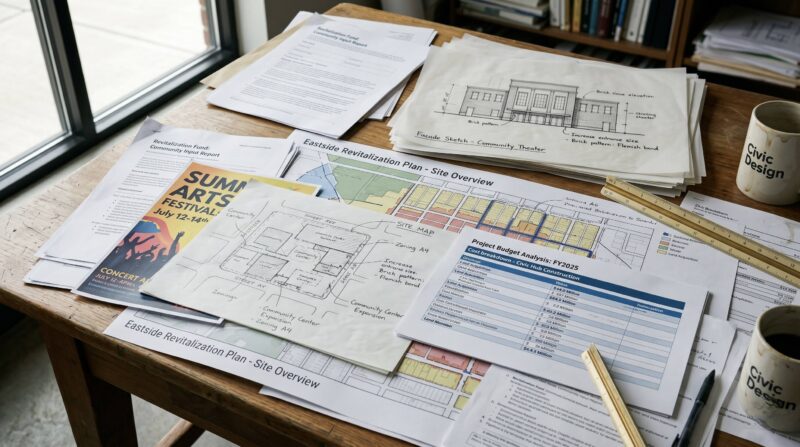
The central question is whether cultural value can be structured in ways that long-term capital can recognize without stripping communities of ownership or meaning.
This transformation has precedents. Music royalties become more stable income streams when assembled across thousands of songs, artists, and genres. Ground leases, once understood as idiosyncratic single-property arrangements, became more legible to institutional capital after standardization and aggregation. Cultural investment today sits where these assets once did: valuable, but not yet structured in a way that larger pools of capital can easily understand.
Once cultural investment is aggregated across 30, 50, or 100 neighborhood-level bundles across a borough, metro area, or state, the statistical properties begin to change. Individual neighborhood variance starts to smooth out. The contractual revenue base becomes more diversified. Commercial activity is spread across multiple local economies. Property value effects, while still uneven, may begin to converge toward broader metro- or regional trends that can be more predictable and measurable.
But the deeper case for cultural infrastructure is not simply that it can create upside. It may also help stabilize places.
The barrier may not be the absence of value, but the absence of a structure capable of recognizing and financing that value.
A neighborhood with active cultural programming can retain a more diverse resident base, support a wider range of small businesses and commercial tenants, maintain foot traffic through economic cycles, and resist both rapid speculative repricing and the hollowing-out associated with disinvestment. Culture, in this sense, is not decoration. It is part of the social and economic fabric that helps places remain livable.
This is where the design of the investment vehicle matters. Cultural investment should not become another mechanism for extracting value from communities or accelerating displacement. If the financial upside flows only to property owners while residents, artists, and local businesses bear the costs of rising rents and commodified identity, the model has failed its civic purpose. Any serious cultural infrastructure fund would need governance structures, community benefit mechanisms, patient capital, and safeguards against cultural extraction.
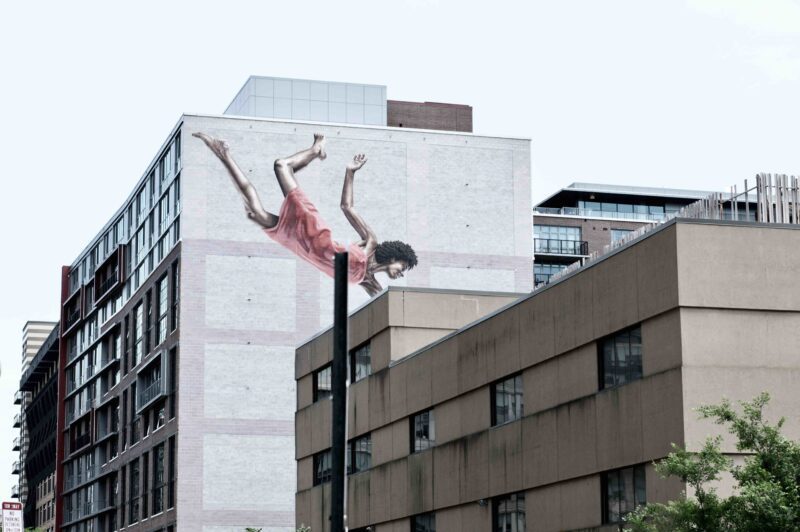
When cultural investment works, it does more than animate a district; it strengthens the social fabric that allows local economies to endure; Image by Terrillo Walls
The goal should not be to “monetize culture” in the narrowest sense. It should be to recognize that culture already produces economic and civic value — and to design financial structures that allow more of that value to be reinvested in the communities that generate it.
By convention, cultural support has largely been framed through public policy, philanthropy, and impact investing. These approaches remain important. But they often leave intact an assumption that social benefit and financial return sit on opposite sides of the ledger. Cultural infrastructure challenges that assumption. Under the right conditions, the same forces that make a neighborhood more vibrant, inclusive, and resilient may also make it a stronger long-term investment.
The portfolio approach does not eliminate risk. It redistributes and reframes it. It treats cultural life as critical civic infrastructure rather than a discretionary amenity. It asks whether cultural investment can be designed as a self-sustaining asset class — one that generates measurable returns across time horizons and geographies while contributing to more livable, community-centered cities.
Culture is not decoration. It is part of the social and economic fabric that helps places remain livable.
The rare disease drug analogy is not perfect. Cities are not pharmaceutical pipelines, and communities are not drug candidates. But the lesson is useful: sometimes the barrier is not the absence of value, but the absence of a structure capable of recognizing and financing that value.
Biomedicine found ways to make previously infeasible treatments investable, improving the lives of patients who might otherwise have been left outside the market. Cultural investment may require a similar structural imagination. If we can build vehicles that aggregate risk, measure value more intelligently, and protect the communities that create cultural vitality in the first place, cultural infrastructure could become more than a public good in search of subsidy. It could become a cornerstone of more resilient urban economies.
—
Author’s note: The research referenced in this article is available as a preprint: Yulin Peng, “Cultural Investment as an Intangible Asset,” SSRN, November 16, 2025.