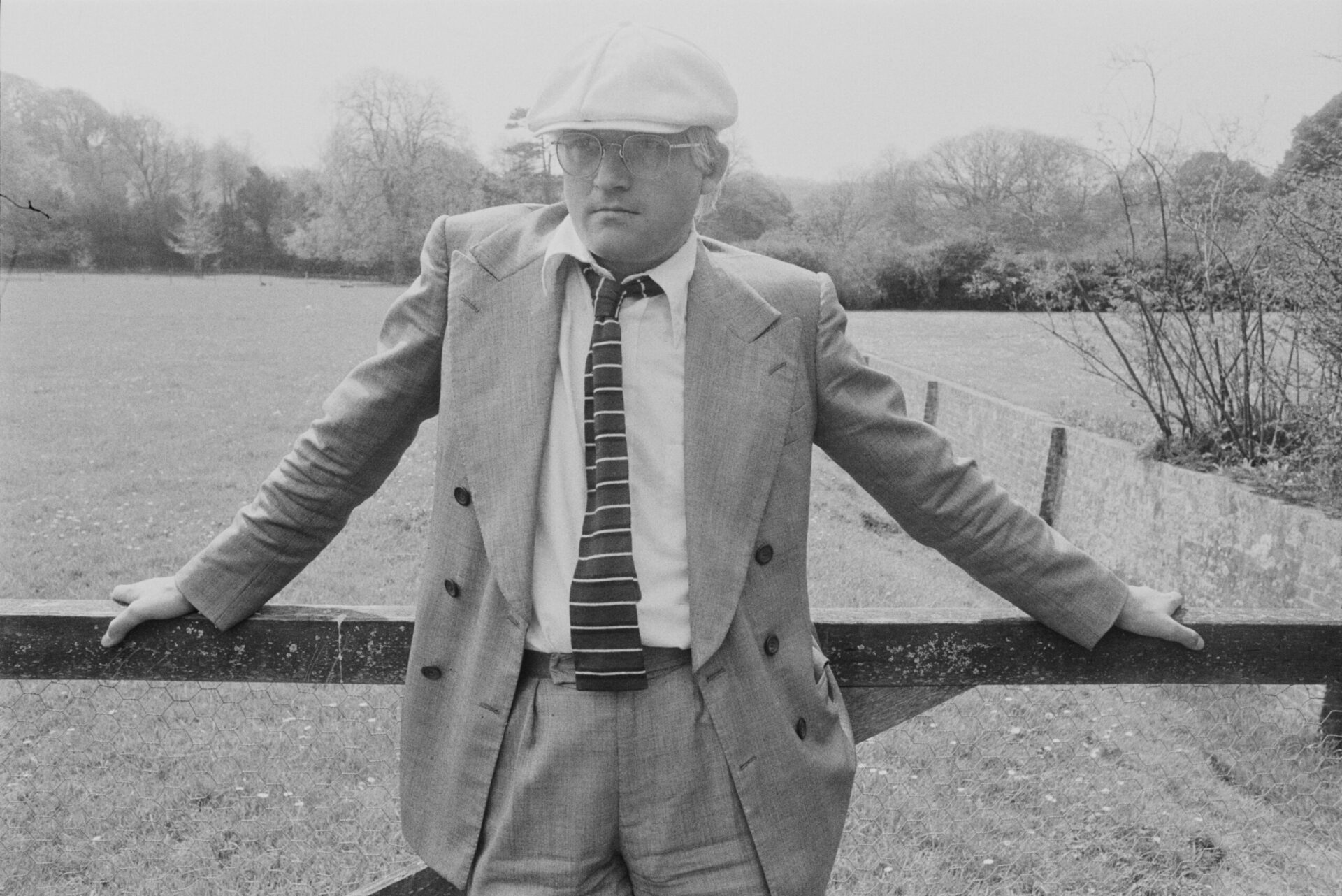

David Hockney believed painting could change the world; in the midst of all our miseries, he said, art lets us see the world as beautiful, thrilling, mysterious. Hockney, one of the best-known contemporary artists, has died at home, age 88, his publicist said Friday.
The artist, who died on Thursday, was one month short of his 89th birthday, publicist Erica Bolton said in a statement. He is survived by his long-time partner and companion Jean-Pierre Gonçalves de Lima.
"David Hockney's enduring legacy reflects his underlying enthusiasm for life, his outstanding sense of humor, his immense generosity, and his investigative curiosity encapsulated by his signature phrase," she said. "Love life."
British, he spent decades working in Los Angeles, making images that captured the wealth and sunshine of Southern California. Hockney created art on canvas, paper, photographic film, videos, iPhones and iPads. His bright, cheerful paintings sold for millions.
"I enjoy looking …" he explained to me when he was 79. "I can look at a little puddle on a road in Yorkshire and just of the rain falling on it and think it's marvelous. I see the world as very beautiful."

With electric colors — blues, greens, yellows, fuchsia — he made merry beauties all his life. Pictures of tree-lined roads, flowers, snow-covered trees, the Grand Canyon. The world became new in his hands. Hockney also made portraits of friends and helpers.
Los Angeles County Museum of Art curator Stephanie Barron remembers posing for him. She figured she'd go to work after a sitting. "What I found instead is that I was so exhausted from the intensity of the scrutiny, I went home and took a nap," she said. (You can hear from many more of Hockney's models in this story from 2018.)
Happily and luckily, I interviewed Hockney over the years. Our first encounter was in Paris in 2010 — an exhibit of little pictures he was making on his recently-discovered iPhone. He was charming, lively, open and engaged — and crazy for technology. An app called Brushes gave him a virtual paint box. Dipping his fingers into various colors, he touched the small iPhone screen and drew with his thumb. Then he got an iPad.
"The moment I got to the iPad, I found myself using every finger," he said.
He was engrossed, his friend Charlie Scheips, said. "He said he sometimes gets so obsessed that when he's going at it, he rubs his finger on his clothes to like, clean the finger as if he was using real paint." (You can see artworks Hockney created on the iPhone and iPad here.)
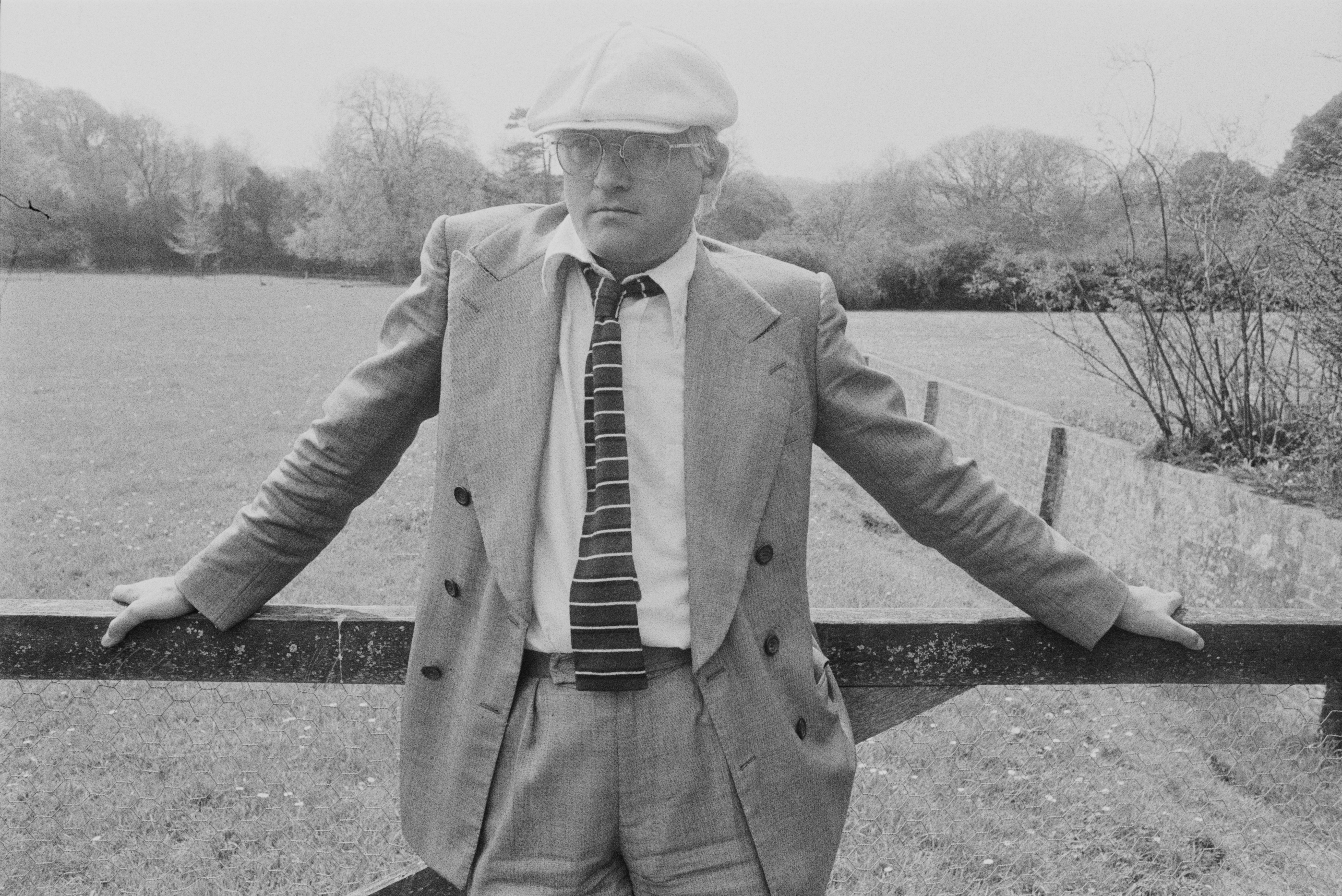
Raised by supportive parents in a simple English town, Hockney struggled with his sexuality. In the early '60s he came out. Films show him then with dyed blond hair and flamboyant outfits — a pink plaid suit, wide black and white striped tie, a red sock on one foot, green on the other. His lovers were young and beautiful. In the LA paintings they loll around at swimming pools, displaying divine derrieres. Pools were an obsession.

"Water offers an interesting graphic problem, it seems to me," he explained. "Say, a swimming pool, the water is transparent. How do you paint transparency? It has reflections and things."
A Bigger Splash, his best-known painting from 1967, shows a California swimming pool, tan diving board angling in from the bottom right, and rising from the aquamarine water, a lively, white splash. Someone just dove in.
"I spent longer on the splash than on any other thing in the painting," Hockney says. "I spent about a week painting it because it's painted with small brushes. I mean, I didn't want to just take a brush and splash it like that. I wanted to paint it slowly. And I thought then it contradicts the splash really."
An actual splash lasts a few seconds. Painting it took a week.
As his 80th birthday approached in 2017 museums were flooded with Hockneys. He was getting ready to go to London for one opening. I saw him then, for the last time, at his LA studio, surrounded by some comfy chairs, five easels, and clouds of cigarette smoke. The floor had dark brown smears from the smokes he chain-puffed, then stubbed out with his foot. Knowing he'd be fussed over in London, he said he didn't like parties anymore. "Too deaf for them," he said. They made him sad.
"I just have to leave and go home, have a sit in a quiet bedroom," he said. "And that's what I do. And then I read. … That's my life now. I mean, that's what it's going to be."
But his eyes twinkled when he said that. And friends sitting near smiled indulgently.
He went on painting after I left, and made art the next day, the day after that, the day after that.
David Hockney: Always looking, and giving us the world as he wanted us to see it. Through joyous, vibrant pictures. That 80th birthday year, in Paris, there was a huge retrospective. The last piece in the show was graffitied on a white museum wall. In blue, on the white, Hockney had painted: Love Life D.H.

Copyright 2026, NPR