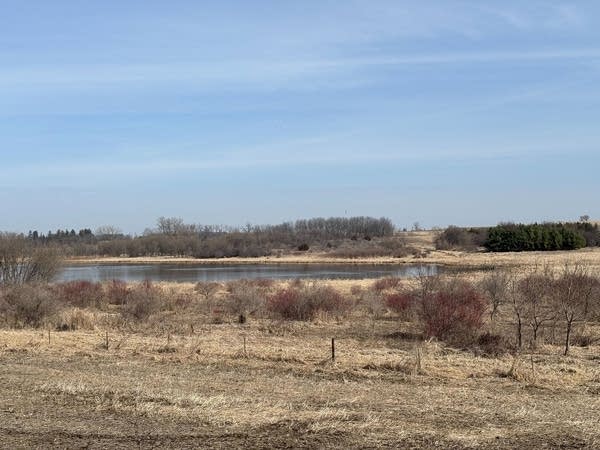
It was a grey and windy early spring day in rural Houston County, but standing on her front lawn, Dayva Goetzinger said the night before was spectacular.
“My husband and my son were pitching balls to each other, and my daughter and I were playing catch. The sunset was gorgeous, it was reds and pinks,” she said. Goetzinger and her daughter paused to admire it.
“And then my daughter looked over to the tree line, and she goes, ‘Is that where the power lines are going to go?’ And I said, ‘Not, if we can help it.’”
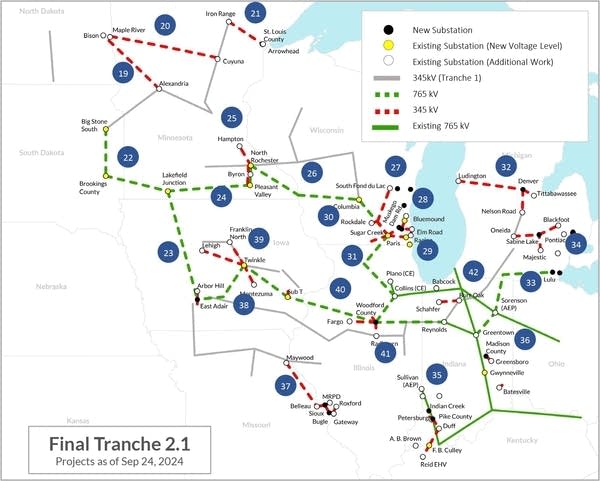
The powerlines Goetzinger doesn’t want cutting across her bucolic landscape are a part of a massive, $21.8 billion effort to update and expand the Midwest’s power grid. If approved by the Minnesota Public Utilities Commission, the so-called “electricity superhighway” will include a 765-kilovolt backbone across the lower half of Minnesota – the first of its size in the state and some of the largest transmission infrastructure being built in the country right now.
Electricity companies and renewable energy advocates say the project is needed to make the grid more reliable, meet increased demand for electricity and to distribute solar and wind energy throughout the Upper Midwest.

But for landowners like Goetzinger, it’s hard to envision these massive towers that could be 175 feet tall fitting in with their picturesque rural life.
She’s among dozens of people who have submitted concerns about the powerline proposal to the Minnesota Public Utilities Commission. Her concerns are wide ranging, from the noise the new lines could make and the impacts construction of the line could have on groundwater, to the effect the new lines could have on wildlife.
And like other landowners in the area, Goetzinger said the whole endeavor feels like it will benefit urban areas more where demand for energy is higher.
“We all need electricity, right? But I think when they talk about the need, I don't think it's for here,” she said. “It's not for us. We're a pass through. I think it's pretty detrimental what they're willing to do for green.
A more reliable, renewable grid
In 2024, the Midwest Independent System Operator, which manages the region’s electric grid, approved a plan for 24 new energy transmission projects in nine states, including Minnesota. The route that would cut through southeast Minnesota where Goetzinger lives is called the Gopher to Badger line connecting another route from South Dakota to Wisconsin.
“Transmission has been needed on our grid to interconnect renewable energy, particularly in the wind rich areas of the Dakotas,” said Gabe Chan, who is a professor at the University of Minnesota’s Humphrey School of Public Affairs. “[It also] addresses what's called congestion on the grid, where there isn't enough capacity to move power from where it's being generated to where it's being used. And it helps meet public policy goals that states have…like being carbon free,” he said.
Minnesota is one of those states, as a law enacted in 2023 requires 100 percent of the electricity used in the state to be generated by carbon-free sources by 2040.
Chan said selling renewable energy made in the upper Midwest to more places makes good economic sense, too: More customers mean lower energy costs for everyone.
Xcel Energy and Wisconsin-based Dairyland Power Cooperative are behind the expansion in southeast Minnesota. Xcel spokesman Randy Fordice said Minnesota’s carbon free goals are part of the calculus, too.
“Energy companies in the Upper Midwest are facing a pretty significant amount of growth in our expected electric use in the coming decades, combined with some pretty significant changes in the way that we generate and use electricity, along with the expected retirements of older plants throughout the region,” said Fordice.
A fragile karst topography
In Houston County, one of those transmission towers could be built just feet away from John Pugleasa's home. There's already a tower at the top of his driveway and the new line may be built along the same route.
Pugleasahas been working with other landowners to learn more about the project and push for alternatives like an underground network of transmission lines that he argues would be less disruptive to wildlife and the land.
Pugleasa is not wild about the aesthetics of having a much bigger tower in his front yard. But as the former public health director for the county, he said he’s more concerned about how construction will affect groundwater. The land in southeast Minnesota is porous and fragile. Water pollution from farming and construction is always a concern.
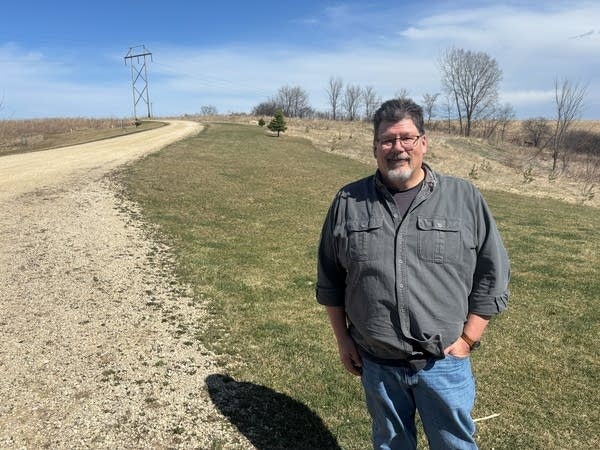
“People have called it Swiss cheese,” he said. “And this level of industrial development, heavy equipment, heavy things, will probably compact a lot of that."
Pugleasa isn’t against more renewable energy, either.
“Climate is something we should all be engaged in,” he said. “You should think, also, about the ecological and environmental impacts of transmitting all that juice."
If the Gopher to Badger line moves forward, Xcel said there will be environmental assessments to address concerns raised by landowners and conservationists. Their input could alter the proposed route, too. Xcel said that they don’t expect to begin building the new transmission lines until 2030.