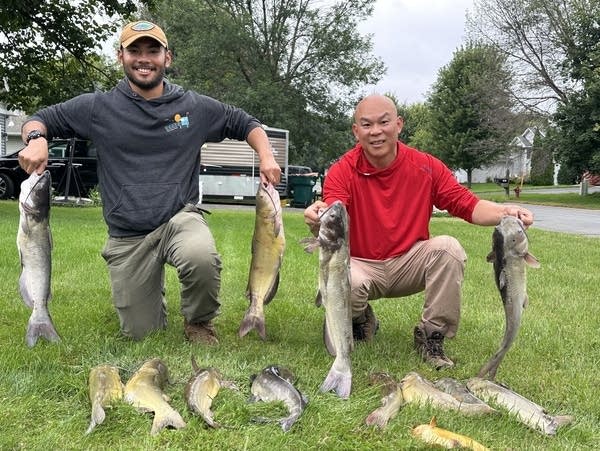
The fishing opener is just weeks away, and state health officials have updated their guidelines on how much fish is safe to eat from lakes and rivers across the state, in an effort to better protect Minnesota anglers and others from harmful pollutants including mercury and PFAS.
The updates from the Minnesota Department of Health include recommendations to eat smaller walleye and northern pike, because older, larger fish tend to contain more mercury.
The revisions also for the first time include specific guidelines for northeast Minnesota, where mercury levels in fish are among the highest in the state, and new suggested limits for the Vermillion River in Dakota and Scott counties in the southern Twin Cities metro area, where PFAS, or “forever chemicals,” have been found in fish.
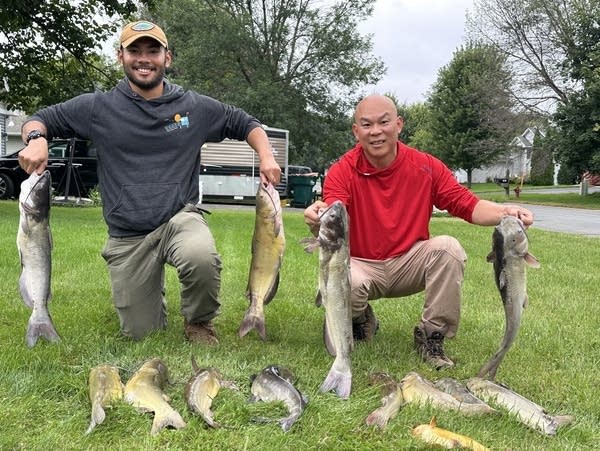
The changes in the mercury guidelines aren’t because of an increase in levels of the toxin, although mercury levels in Minnesota’s fish have been slowly but steadily growing for the past 30 years. Rather, they’re based on a new analysis of mercury data going back to 1967. It also represents an effort to simplify the recommendations by limiting the number of lakes and rivers with waterbody-specific guidelines.
Public health officials are trying to thread a needle that recognizes the health benefits of eating fish– which contains omega-3 fatty acids that help with heart health and brain function– while also keeping people safe from certain toxins. Mercury is a potent neurotoxin to the brain which can impact learning and memory in a fetus during pregnancy, and can continue to impair the brain through infancy and childhood.
“But we also know that, especially people that are pregnant and planning pregnancy, if they're eating moderate amounts of fish low in contaminants, that often their infants have better neurodevelopmental outcomes,” Angela Preimesberger, MDH’s fish consumption guidance program lead, told MPR News. “And so that's why we don't want people to stop eating fish.”
Health officials offer more restrictive guidelines for people who are especially sensitive to the toxins, including children under 15, and people 15 and older who are or could become pregnant, along with those who are breastfeeding or plan to breastfeed.
In Cook, Lake and St. Louis counties in northeast Minnesota, the new guidelines for sensitive groups recommend that people:
–Do not eat muskie, northern pike 26 inches or longer, or walleye 18 inches or longer
–Limit consumption to one serving per month of bass, catfish, lake trout, northern shorter than 26 inches, walleye shorter than 18 inches, and yellow perch
–Limit consumption to one serving per week of bullhead, crappie, inland trout, lake herring (cisco), whitefish, and sunfish (such as bluegill)
For the general population, the new guidelines recommend:
–no more than one serving per month of muskie
–no more than one serving per week of bass, catfish, lake trout, northern pike, walleye and yellow perch
–no more than two servings per week of crappie and sunfish
–no more than four servings per week of bullhead, inland trout, lake herring, and whitefish
Health officials also added length-based guidelines for walleye and northern pike. Sensitive populations should not eat more than one serving per month, and the fish should be less than 20 inches long. In northeast Minnesota, officials recommend those groups eat walleye and northern smaller than 18 inches.
Some lakes with higher mercury levels in northeast Minnesota have more restrictive guidelines. The department of health added 17-inch guidelines to nine lakes in northeast counties, following questions from MPR News and other media.
Those lakes include Mit Lake in Cook County, and Crane, Colby, Esquagama, Lower and Upper Comstock, and Lower and Upper Pauness lakes, all of which are in St. Louis County.
But those recommendations don’t go far enough for some, especially for Crane Lake, a huge lake on the edge of Voyageurs National Park that’s a popular destination for anglers.
Large walleye tested in Crane Lake contain much higher for levels of mercury than what’s considered safe, especially for sensitive groups. Despite that, the new regulations there are less restrictive than the 15-inch walleye limit that was previously recommended for sensitive groups.
“The mercury is really high in those walleyes. There should be an advisory that tells pregnant women not to eat them,” said Eric Morrison, a volunteer with the Northern Lakes Scientific Advisory Panel.
Morrison would like to see state officials list average mercury content in fish in various lakes, so people can know what they’re eating.
The Department of Health’s Preimsberger acknowledges it can be confusing to figure out which fish is safe to eat, so she recommends checking specific lakes and rivers before going fishing.
“Check before you go and see if there are any guidelines for the particular water body where you're going to fish, whether it's a lake or a river, and then you'll know how many of those fish you can safely eat.”

Mercury is emitted into the atmosphere from coal-burning power plants and other industrial facilities outside of Minnesota and within the state, including six huge taconite plants in northeast Minnesota, which are the state’s largest mercury emitters.
It falls to the earth in rain and snow, and then runs off into waterways, where it’s converted into a toxic form that works its way up the food chain, bioaccumulating in fish. Larger and older fish accumulate more mercury.
In Cook, Lake and St. Louis counties, several factors contribute to lakes and rivers having fish with higher mercury concentrations than elsewhere in the state.
The region, which includes the Boundary Waters Canoe Area, has abundant mucky, microbe-rich wetlands, which provide ideal conditions for mercury methylation, the process that turns mercury toxic.
New PFAS guidelines
Health officials have also added consumption guidelines for fish caught in the Vermillion River from headwater streams in Scott and Dakota counties, including the South Branch of the river, to the Hastings Dam, due to PFAS contamination in the waterway.
PFAS are human-made chemicals that do not break down over time and have been widely used for decades to make products ranging from cookware to clothing to carpet. They’ve been linked to harmful impacts on child development, including low birth weight in infants and a weaker immune system in children. They may also cause changes in liver function and increase cancer risks in people of all ages.
“Eating fish is not your only route of exposure to these contaminants,” said Preimsberger, “but where we find these levels are elevated, we encourage people to eat fish in other water bodies.”
The fishing season for trout in inland streams in Minnesota opens Saturday. The fishing season for most other species in Minnesota opens Saturday, May 9.