
Around the start of May, as rent again came due, Pastor Miguel Aviles’s phone rang nearly every hour. Each call weighed heavily on him, as he listened to the desperation on the other end of the line.
More people have called La Viña church in Burnsville about rent help in the past two weeks than at any other point this year — including during the peak of the ICE surge.
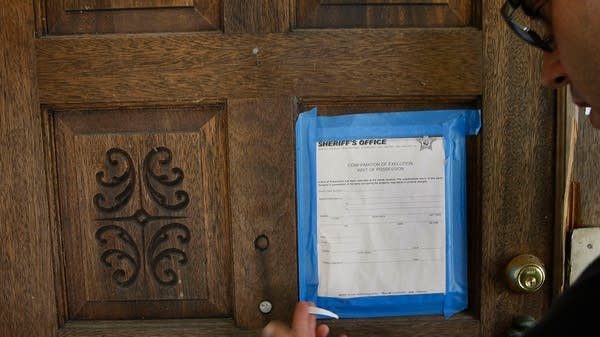
And more and more callers, he said, have been reporting eviction notices.
“Seeing this level of need, month after month, has been heartbreaking,” said Aviles, who has helped raise and distribute more than $800,000 in rent relief to those impacted by ICE since January. “We want to do even more for these families, but we need the financial resources to keep helping at the level this moment requires.”
That’s a common sentiment among those who created community rent funds in response to Operation Metro Surge — especially as statewide eviction filings tick up compared to last year, when the state already hit a record for its most filings.
At the peak of the ICE surge, Minnesotans raised and distributed millions of dollars in quick, low-barrier rent aid. This grassroots movement shielded hundreds of households from facing eviction, allowing immigrants to stay indoors while armed agents patrolled outside schools and bus stops.
But as public attention has waned and smaller, individual donations have slowed down, the landscape has shifted. Some rent funds can no longer operate and are having to direct those seeking aid to other groups. Some of the most visible funds that have received boosts from charitable foundations are shouldering more rent requests, said Yusra Murad, a rent relief organizer with Keep Minnesota Housed.
Murad meets weekly with dozens of rent organizers who are now confronting a crisis that existed even before thousands of federal agents came to Minnesota and caused an estimated $47 million in lost wages per month, according to the city of Minneapolis.
She said with “hundreds more people who have been doing rent relief organizing there’s that feeling of accountability and wanting to support everybody who is living in unaffordable rental housing,” she said. But the question is now: “can we keep this going?”
Many rent relief funds are now relying on donations from charitable foundations to stay afloat, largely from the Wilson Foundation, which has thus far distributed about $14 million to different community groups for rent relief, according to biotech entrepreneur John Wilson.
In Minneapolis, the city council has allocated $3.8 million for emergency rental assistance and the first $2 million was made available for residents late April. That support is only accessible to those who make below 30 percent of the area median income and who have a pre-eviction notice — a departure from the usual eviction filing requirement.
Meanwhile, state support is uncertain. The Minnesota Senate approved $40 million for emergency rental assistance in response to ICE, but the bill still needs to pass the House of Representatives, where Republican leaders have said they will not support it.

Those on the frontlines of rent relief say that additional funding is crucial.
At Shir Tikvah synagogue, the Yesod fund received a record number of requests for rent help around the turn of May — more than at any other point since the fund’s creation in January.
“We lack the resources to cover the current level of need,” said Raena Barrios, the director of operations for Shir Tikvah, whose usual job responsibilities have taken a back seat to triaging the aftermath of the ICE surge.
749 people requested help in the first week of May, totaling $2.2 million in requests, Barrios said. That’s more than double the amount of requests they received during the first week of April.
Barrios said as other rent funds have slowed down or closed, and as word has spread that the Yesod fund is still running, more neighbors have turned to them for help.
The vast majority of requests continue to come from people impacted by ICE, usually households that lost work or are scrambling to make ends meet after a family member was deported.
The fund has had to prioritize people faced with an eviction notice and those with more than two months of rent debt — and has thus far been able to support all of the folks who have reached that point — but the need is far greater than any rent fund can cover.
The “basically constant” support from smaller, individual donations the Yesod fund once received has “come to a trickle,” Barrios said, and they are now relying on a few beefier donations from charitable foundations.
In total, the Yesod Fund has raised and distributed $4.5 million in rental assistance since January. The goal is to keep up the fund, especially as she predicts new needs emerging during this presidential administration, Barrios said.
The Yesod fund is just one of dozens of community rent aid funds that emerged in response to ICE, and whose organizers are navigating the road ahead as attention wanes but need persists.
“I sometimes wish that our politicians and organizations with wealth in our neighborhoods could see what a day in running a mutual aid fund looks like and feels like,” she said. “Because I think it would really change some hearts and minds of the ways that we take care of our people.”