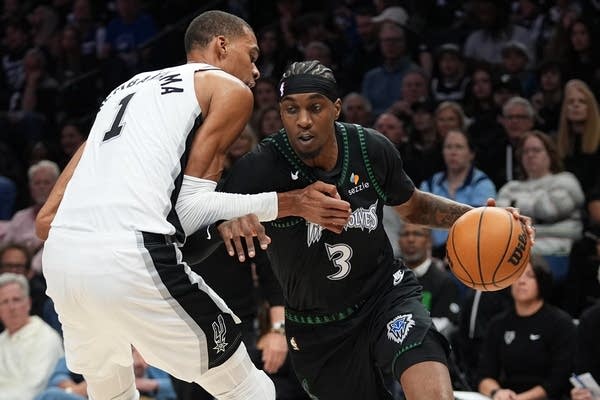
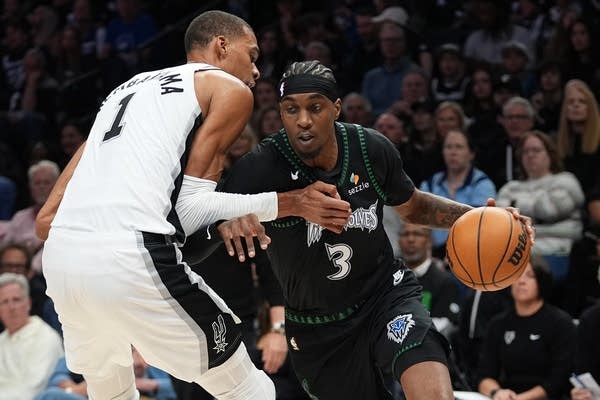
Victor Wembanyama delivered another masterpiece with 39 points, 15 rebounds and more game-wrecking defense for the San Antonio Spurs, who took a 2-1 lead in the second-round NBA playoff series with a 115-108 victory over the Minnesota Timberwolves on Friday night.
Wembanyama went 13 of 18 from the floor and 10 of 12 from the line, adding five blocks and a full night of paint deterrence as the Spurs won their second straight game after dropping the opener at home.
“It was like holding the ship together. We had a lead. We didn’t need to rush. We needed to be consistent,” Wembanyama said.
De'Aaron Fox scored 17 points, and Stephon Castle had 13 points and 12 assists with a team-high plus-17 rating.
Anthony Edwards had 32 points and 14 rebounds and Naz Reid added 18 points and nine rebounds for the Wolves, whose defense kept them alive after a woeful start but allowed the Spurs to shoot 6 for 10 from 3-point range in the pivotal third quarter.
Minnesota will host Game 4 on Sunday night. The series shifts back to San Antonio for Game 5 on Tuesday.
Jaden McDaniels drew Wembanyama's fifth foul with 6:18 left and brought the Wolves within 99-98 on pair of free throws, but the Spurs never trailed in the second half despite never leading by double digits. Wembanyama sat for about a minute before coach Mitch Johnson sent him back in.
“We were going to not leave any bullets in the chamber in terms of keeping him on the bench," Johnson said. "We were going to play him, and then if he fouled out, we deal with that.”
Wembanyama didn't flinch despite the foul risk, finishing with 16 points in the fourth quarter. His 3-pointer that answered Reid's pushed San Antonio's lead to six with 3:06 to go. Reid tried another one near the end of the shot clock on the next possession that hit the rim and Wembanyama snagged for another rebound.
Edwards, who showed Minnesota yet again his swift healing ability by returning from a deep bone bruise in his hyperextended left knee after just one week to make the start of the series, had 22 points in the first half to help them snap back from an early 18-3 deficit.
“He needed that. We needed that,” coach Chris Finch said. “He’s battling back to find a game like this, and it couldn’t have come at a better time. Unfortunately, we couldn’t get the result that went along with it.”
The Wolves missed their first 12 shots and didn't get a basket to go down until Rudy Gobert's putback with 6:52 had elapsed, but unlike in the 133-95 drubbing they took in Game 2 on Wednesday they had the defensive intelligence and tenacity at the ready to make up for the long shooting lulls.
Edwards hit a buzzer-beating 31-footer at the end of the first quarter, and McDaniels swished a 3-pointer from the wing to end the first half with a 51-all tie.
McDaniels and Julius Randle were the most affected by Wembanyama's presence, unable to get their short-range and rim-attacking game going. They shot a combined 8 for 34 from the floor.
“I went in the locker room and told the guys we had a bunch of great looks,” Edwards said. “If we make our shots, we win this game.”