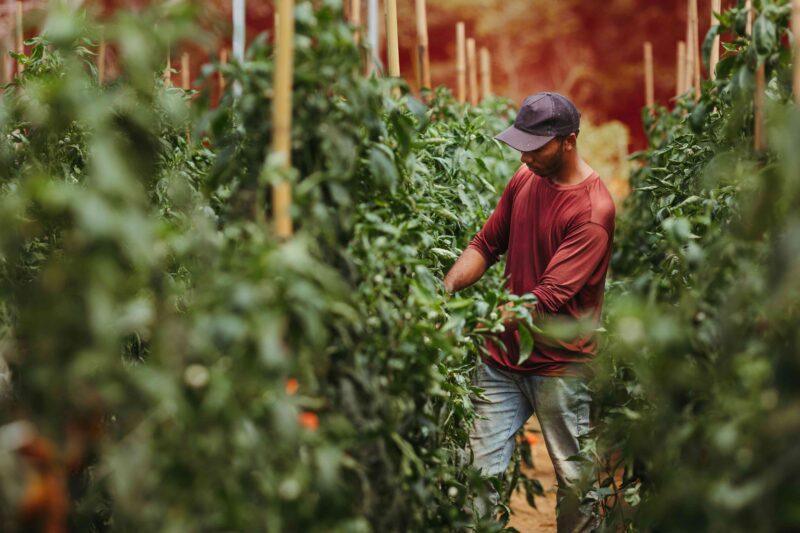
Near the town of Caldono in Cauca, one avocado farm employing former FARC fighters and local residents shows both the promise and fragility of this transition. On paper, the project looks like successful reintegration: former combatants cultivate legal crops, cooperate through collective structures, and attempt to build a civilian economic future. But the farm has also faced technical setbacks, uneven funding, market uncertainty, weak rural infrastructure, and the insecurity that continues to shape life in former conflict strongholds.
The case points to a broader lesson for impact practitioners: reintegration is not the same as durable recovery. Participation in legal economic activity matters, but participation without land security, finance, stable buyers, protection, and public infrastructure can reproduce fragility rather than resolve it.
Participation without stability
Following the peace agreement, roughly 14,000 former FARC members entered demobilization and reintegration programs. In 2017, ECOMUN — Economías Sociales del Común — was created as a social and solidarity-economy cooperative structure intended to support former combatants as they moved into productive civilian life. DT Global describes ECOMUN as a cooperative model designed to bring together some 13,000 ex-combatants, while the European Commission has noted that social and solidarity-economy initiatives have supported former combatants through cooperatives, technical training, and collective productive projects.
Legal work is only the first step in reintegration; durable recovery requires the conditions that make rural livelihoods stable over time; Photo by Getty Images
That collective approach matters. Many former combatants left the war with disrupted education, limited formal work histories, weak access to capital, social stigma, and little experience navigating civilian markets. Cooperative structures can lower the individual risk of starting over. They can also create spaces of trust, shared production, and community reintegration in places where the formal market alone is not ready to absorb people.
There is evidence that peace created economic openings. Research in the Journal of Development Economics found increased firm entry in municipalities formerly affected by FARC violence, and a CEPAL Review analysis found that Colombia’s GDP performed better during the peace-negotiation period than a modeled counterfactual in which the conflict continued. But aggregate gains do not erase the harder question: whether former combatants can access the systems that make livelihoods stable.
Reintegration is not the same as durable recovery.
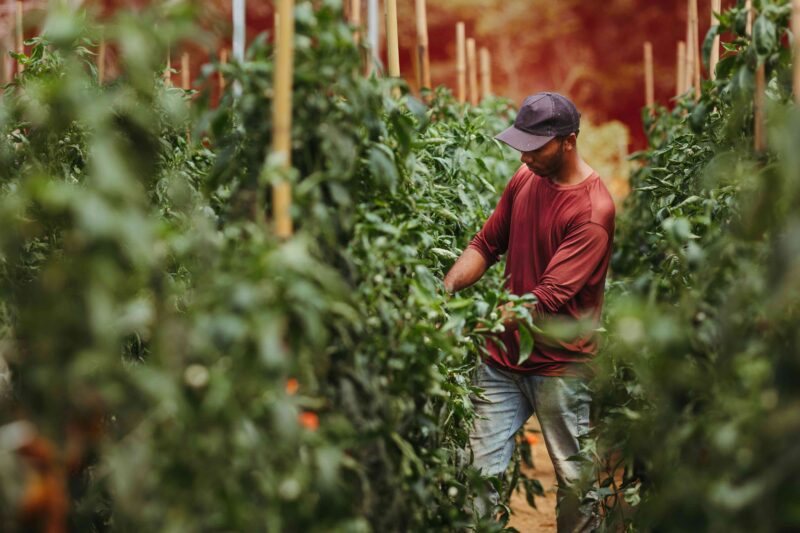
The avocado farm near Caldono makes that distinction visible. Harvest cycles, price volatility, technical setbacks, security risk, and limited infrastructure can all turn participation into precarity. Former combatants may be producing, but they are still operating in markets that do not reliably distribute risk.
Land, infrastructure, and uneven reintegration
Land is one of the most important structural constraints. The peace agreement included an ambitious rural-reform agenda, but implementation has been slow and uneven. The International Crisis Group has emphasized that land access, insecurity, and weak state presence continue to undermine reintegration, while a 2024 peace implementation report found that land restitution and former-combatant reintegration remained constrained by poor security conditions and slow implementation.
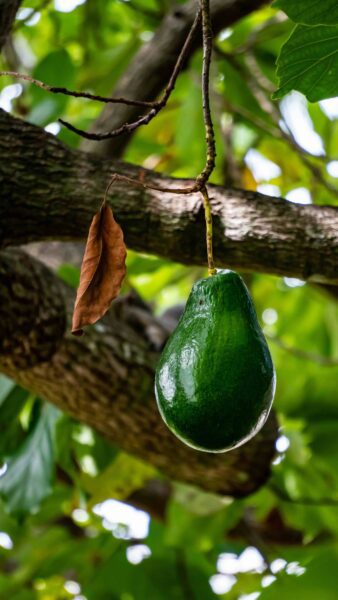
A single crop can anchor a livelihood, but only if the surrounding systems can support production, transport, sale, and reinvestment; Photo by Juan C. Montes
This matters because many reintegration projects are agricultural. Agriculture without secure land tenure is not a durable livelihood strategy; it is a bet placed on unstable ground. Farmers need confidence that they can invest in trees, irrigation, storage, soil quality, and buyer relationships without being displaced, threatened, or trapped in legal uncertainty.
The former Territorial Areas for Training and Reincorporation were intended to support the transition from armed life to civilian work through education, training, and state assistance. But many former combatants now live outside those zones, dispersed across rural and urban areas where state presence varies dramatically; in some cases, threats have forced former fighters to abandon reincorporation settlements. A productive project may work in one region because local institutions, security conditions, and buyers align, while a similar project elsewhere may fail because those conditions are absent.
Infrastructure deepens the problem. Roads, storage, cold chains, technical assistance, and transport links determine whether crops can reach buyers at the right time and quality. For a crop like avocado, market access depends not only on planting and harvest, but on post-harvest handling, logistics, and the ability to meet buyer standards. Without that connective infrastructure, agricultural reintegration projects remain stuck at the fragile edge of the value chain.
Security as economic infrastructure
Reintegration also unfolds within a deteriorating security environment. Dissident armed groups, narcotrafficking networks, and weak state presence continue to threaten former combatants and local communities. The UN Verification Mission in Colombia has continued to document killings and attempted homicides of former combatants, and Security Council Report noted in April 2026 that the number of ex-FARC members killed since the agreement had reached 491.
This is not a separate security issue sitting outside the economy. It is an economic condition. Insecurity discourages investment, disrupts distribution, raises transport costs, makes buyers cautious, and limits the long-term planning required for agricultural production. A cooperative cannot become commercially durable if its members are deciding whether to plant, harvest, move, or remain based on the presence of armed actors.
Recent violence among armed groups also underscores how fragile territorial control remains. In 2026, clashes between armed groups in Colombia killed at least 52 people in a cocaine-trafficking region, illustrating how illegal economies continue to shape rural insecurity. That violence is not simply a backdrop to reintegration. It competes directly with legal enterprise for labor, territory, logistics, and legitimacy.
Peace needs more than demobilization. It needs an economy capable of making civilian life viable.
As one former combatant told NPR in an earlier report on ex-rebel fighters returning to illegal economies, the government had promised jobs and education, but many were still waiting. The point is not that former combatants inevitably return to armed or illegal sectors. It is that weak livelihoods and poor security create recruitment pressure, especially where legal income remains irregular and state support is thin.
Market access without market security
Market access is another fragile promise. Some reintegration businesses can reach buyers, but access does not necessarily create stability. Agricultural cooperatives face harvest cycles, fluctuating prices, inconsistent demand, limited bargaining power, and weak value-chain positioning. Selling a crop occasionally is not the same as securing predictable income.
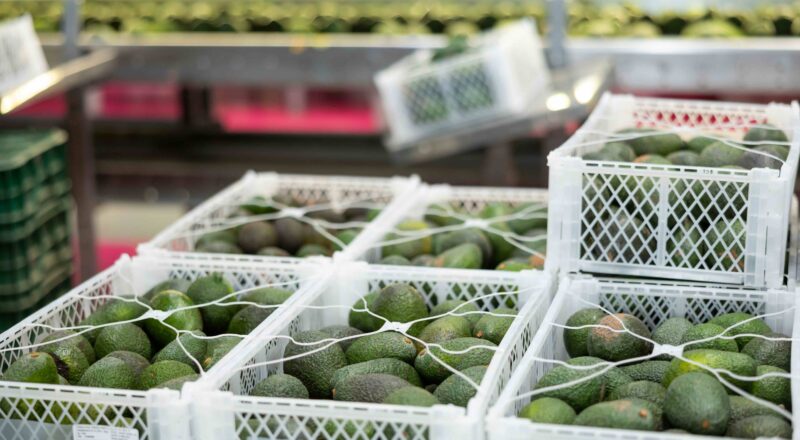
Agricultural reintegration projects need more than land and labor; they need storage, logistics, buyers, and predictable routes to market; Photo by Getty Images
For the avocado cooperative near Caldono, even successful production depends on the systems around it: roads, technical assistance, buyer relationships, quality standards, security, and working capital. If any one of these fails, the risk is pushed back onto former combatants and local communities. In that sense, the project is not only producing avocados. It is absorbing risks that stronger market institutions would normally distribute.
Financial exclusion compounds that fragility. Reintegration stipends and banking initiatives have helped some former combatants enter civilian life, but access to credit, loans, and financial services remains uneven. Research on labor-market attitudes and private-sector reintegration highlights how stigma and formal restrictions can limit economic opportunity for former combatants, especially those linked to sanctions or treated as high-risk borrowers. Without finance, legal enterprise remains difficult to scale.
The result is an economy in which participation can exist without security. Former combatants may work, produce, and organize collectively, but their projects remain vulnerable if they cannot access land, finance, buyers, logistics, protection, and technical support. That is the difference between employment as a program output and livelihoods as a durable recovery system.
What durable recovery requires
For impact investors, funders, and policymakers, Colombia’s reintegration economy offers several lessons.
First, capital must match fragility. Short-term funding cycles and standard credit products are poorly suited to agricultural projects facing insecurity, price volatility, weak infrastructure, and long production timelines. Cooperatives need patient, risk-tolerant capital that can absorb early volatility while building operational capacity.
Second, land tenure is not a background condition; it is part of the investment thesis. Without secure access to land, agricultural reintegration projects cannot confidently invest in productivity, quality, or long-term market relationships.
Third, market integration must go beyond buyer access. Former-combatant cooperatives need value-chain positioning, storage, logistics, technical support, and procurement relationships that reduce volatility rather than merely opening a sales channel.
Security guarantees should be understood as economic infrastructure.
Fourth, security guarantees should be understood as economic infrastructure. A livelihood cannot become durable when members face threats, displacement, recruitment pressure, or the return of armed-group control. Protection, state presence, and territorial governance are not separate from enterprise development; they are prerequisites for it.
Finally, success metrics must change. The question is not only how many former combatants are working, or how many productive projects exist. The deeper question is whether those projects can survive beyond subsidies, resist recruitment pressure, build market relationships, and generate predictable income under conditions of fragility.
Beyond reintegration
Colombia’s reintegration economy should not be read as a simple success or failure story. The avocado cooperative near Caldono, ECOMUN, and related solidarity-economy initiatives demonstrate that former combatants are capable of building legal livelihoods and contributing to community recovery. They also show that participation alone does not guarantee durability.
Peace needs more than demobilization. It needs an economy capable of making civilian life viable. That means land, finance, markets, infrastructure, security, and institutions designed around the realities of people emerging from war. Sustainable peace is not achieved through participation alone, but through the deliberate construction of systems that allow participation to become stable, dignified, and economically durable.
—
This article is part of Impact Entrepreneur’s Impact Journalism Institute, in collaboration with Arts4Refugees’ A4R Media Hub, supporting emerging Gen Z journalistic voices covering how the Impact Economy is being built — and tested — in communities affected by conflict, displacement, and economic fragility.