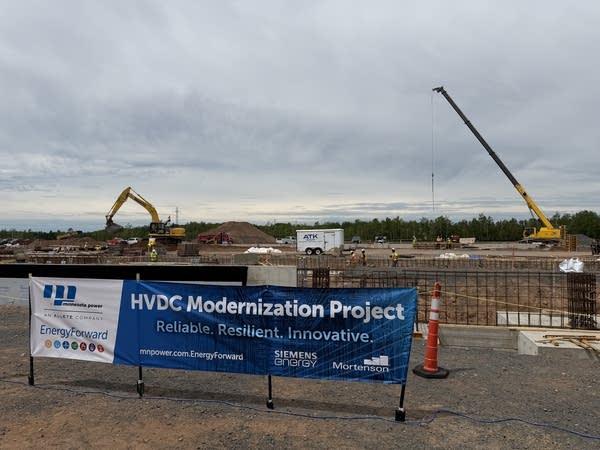
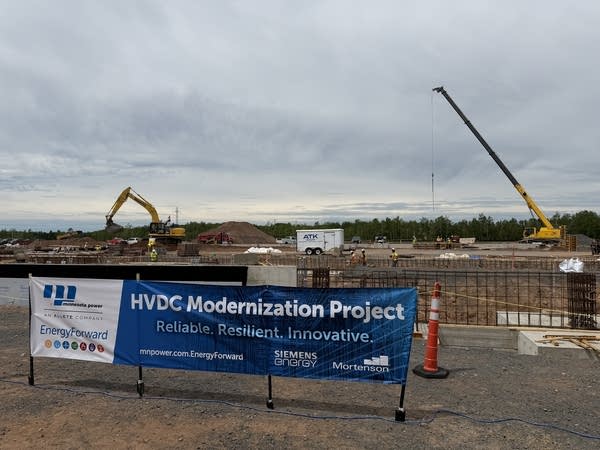
A northern Minnesota utility broke ground this week on a $900 million electric transmission project that’s expected to play a critical role in the state’s clean energy transition.
Duluth-based Minnesota Power is upgrading and expanding a 50-year old high voltage direct current (HVDC) transmission line that runs 465 miles from Center, N.D., to Solway Township, just outside Duluth.
It’s one of just two HVDC lines in Minnesota, and there are only a few across the country. They’re valuable because they transmit electricity more efficiently over long distances than more common alternating current, or AC, lines.
The project is expected to play an important role as Minnesota transitions to an energy future powered largely by renewable electricity that’s often produced in far-flung rural areas, including wind farms in the Dakotas and elsewhere around the upper Midwest.
"This line is primarily driving a lot of our clean energy investments from North Dakota, where wind is most efficient, to here in Duluth,” said Dan Gunderson, Vice President of transmission planning for the utility. “So it's really helping with Minnesota’s clean energy goals."
Utilities in Minnesota are required to produce 100 percent of their electricity from carbon-free sources such as wind and solar by 2040. Minnesota Power currently generates about 60 percent of its electricity from such clean energy sources.
The project does not entail stringing new electric transmission lines. Rather, crews are building new electric substations and converter stations at both ends of the line that will allow Minnesota Power to nearly double the amount of energy the line delivers. The stations will convert the HVDC power to AC so it can flow onto the existing electric grid.
“When they built this line, they manufactured the largest possible cable that they could in the world,” Gunderson said. “This was a record-breaking cable that was on here in the 70s, and so they built it with that future capacity in mind.”
The new converter stations will also allow electricity to flow in either direction. The project will connect to a proposed new 67-mile long power transmission line that will run between the Iron Range and this part of St. Louis County just outside Duluth that Minnesota Power is building out as an electricity transmission hub.
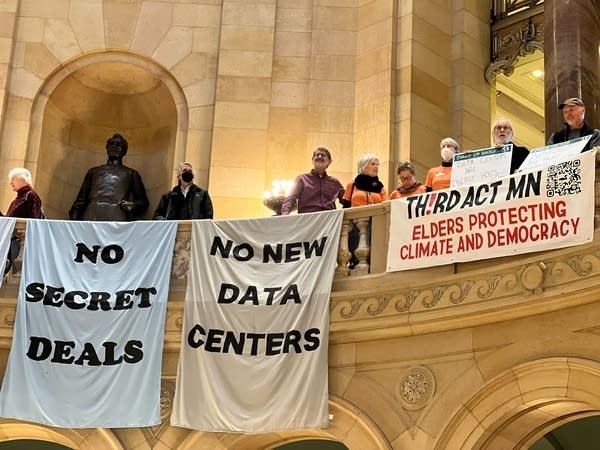
That proposed power line, which still needs approval from the Minnesota Public Utilities Commission, faces opposition from area residents who are fighting a controversial proposed Google hyperscale data center.
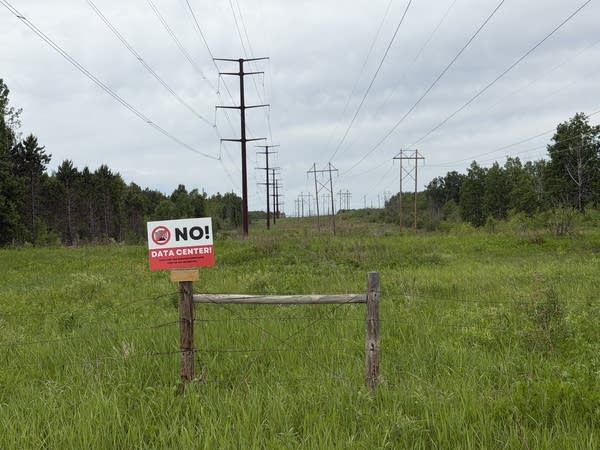
The data center has been proposed for a rural corner of Hermantown adjacent to where the new electric transmission infrastructure is being built. Data centers require enormous amounts of electricity — often as much as small cities — and they are often proposed for locations near sources of large supplies of available electricity.
Planning for this transmission project began over a decade ago, long before Google proposed its data center project for the region. But the improvements the project will provide to the regional electricity grid would support the data center if it’s built, Gunderson said.
“We've always been a utility that served large customers. That's what we do,” Gunderson added. “So we know how to design systems around that, whether it be mining, natural resources or other customers. We want to have a system capable of supporting that.”
The project received $25 million in support from the state, as well as $50 million in federal funding through the bipartisan infrastructure law passed during the Biden administration.
The Trump administration revoked that funding last year as part of its broader effort to cancel $8 billion in grants that the Biden administration awarded to 16 states aimed at accelerating the green energy transition.
But the Department of Energy returned the funding earlier this year after Minnesota Power appealed. “The original grant was very much a bipartisan effort between the delegations from Minnesota and North Dakota, because we have facilities in both areas, and we just reaffirmed that in the appeal,” Gunderson said.